English
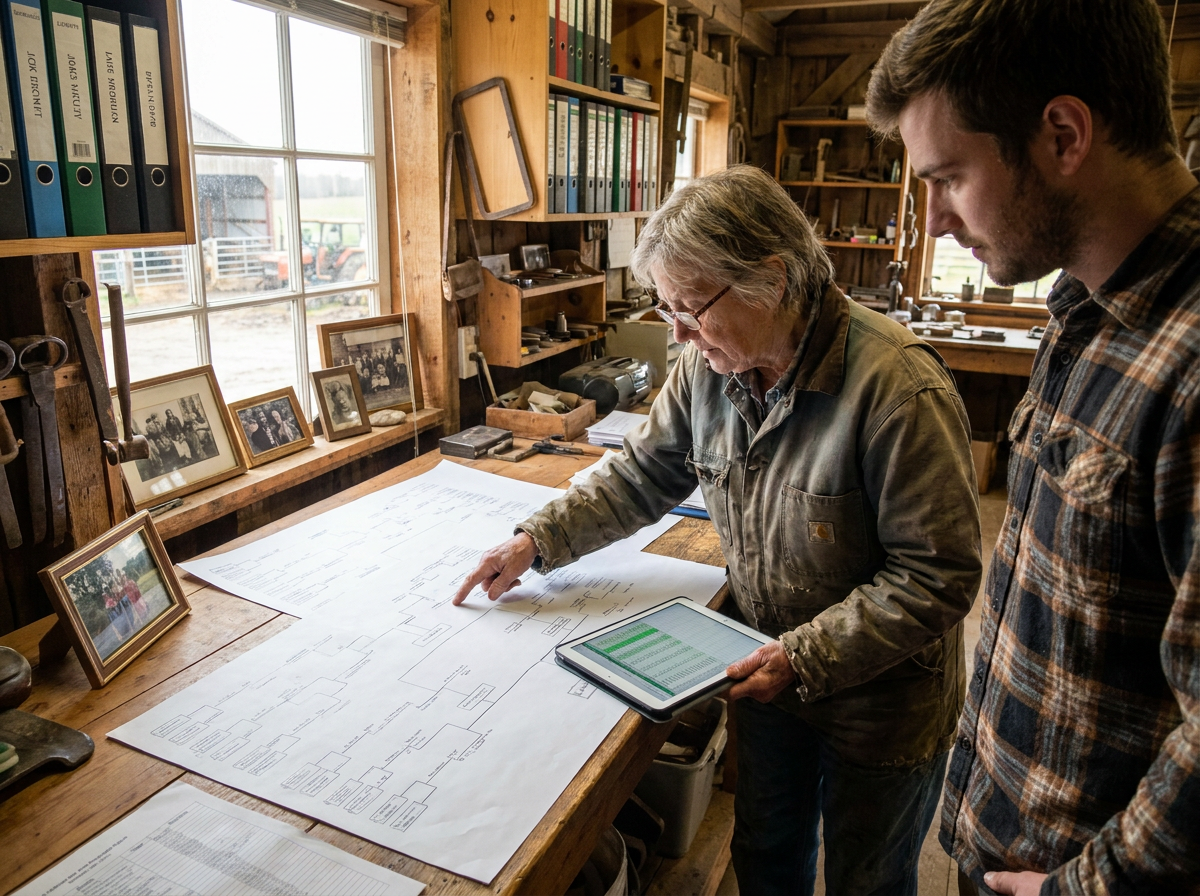
A raw genetic sequence provides little historical meaning until it connects directly to an individual profile inside a pedigree. When researchers test their autosomal markers, the resulting list of genetic cousins and centimorgan totals requires genealogical context to become useful. Linking DNA results to an individual node in a family tree grounds laboratory data in verifiable kinship lines. This integration enables genealogical algorithms to evaluate common ancestors, calculate shared branches, and phase inherited segments across generations.

Without this digital pairing, genetic markers remain isolated data points in a standalone spreadsheet. Integrating test files directly into pedigree software allows automated comparison systems to evaluate family charts across multiple collections, turning bare percentages into identifiable relatives who lived across specific decades and geographic territories.
Key Takeaways
- Attaching a test kit to a personal pedigree profile activates automated matching networks and cross-references historical records.
- Testing close relatives, especially parents or third cousins, sorts matches into distinct maternal and paternal lineages.
- Features like Theory of Family Relativity™ combine family charts, historical records, and genetic data to propose verified kinship pathways.
- Documenting custom match events, total centimorgans, and relationship ranges preserves research integrity across digital platforms.
- Isolating triangulated segments across multiple cousins confirms specific ancestral couples along complex lineage lines.
1. Assign Your Genetic File to Your Personal Node
Every genetic testing service requires the kit manager to declare precisely which individual in the family chart provided the biological sample. Placing your test kit onto your personal profile establishes the root reference point from which all cousin relationships, generational distances, and inheritance paths are calculated.
To complete this connection, navigate to your platform profile settings or pedigree management tab. Select the option to build a family tree, locate your own entry within the chart, and confirm the attachment. Once assigned, your profile gains a distinct genetic badge that signals to matching algorithms that this branch contains active biological data.
       [Great-Grandparent]
              │
       [Grandparent]
              │
          [Parent]
              │
    [You: Kit Attached] ── (Root Node for Matching)
Failing to anchor the test to your personal chart node prevents automated systems from analyzing your generational descent. When the software knows your exact location in the chart, it can trace upward through your lineages to identify intersecting relatives in other family trees.
For researchers who manage multiple kits for relatives, assigning each file correctly is vital. Attaching an aunt's kit to your own profile instead of her designated placard skews the generational distance calculations across every incoming match. Each biological sample must sit squarely on the profile of the person who provided the sample.
2. Connect Tested Parents and Grandparents to Enable Phasing
Linking the DNA profiles of older direct ancestors transforms an ambiguous list of genetic cousins into cleanly separated maternal and paternal branches. When biological parents take an autosomal test and connect their data to their respective nodes, matching systems automatically phase your matches, assigning shared genetic cousins to either your mother's or father's side of the chart.
Phasing is the process of determining which parent contributed each specific piece of your DNA. Humans inherit 50 percent of their autosomal DNA from each parent, but random genetic recombination means that siblings receive different mixtures of ancestral segments. Attaching older generations directly to their placards gives matching algorithms an empirical reference set.

Testing parents and grandparents remains the most direct way to isolate genetic branches. However, testing third cousins or closer relatives can also help assign matches to specific sides of the chart when older generations are unavailable.
- Comparing an unassigned cousin against a parental kit identifies whether kinship sits on the maternal or paternal side.
- Attaching parents provides immediate context that separates paternal cousins from maternal cousins without requiring prior document searches.
- Assigning third cousins or closer helps sort match lists even when parental kits are not available.
- Breaking down endogamous or pedigree collapse branches becomes significantly more manageable when matches are pinned to known parental splits.
This biological sorting prevents wasted hours chasing matches along your paternal line who actually share heritage through a maternal great-grandparent. Once maternal and paternal matches are partitioned, researchers can concentrate their documentary efforts on the correct branch of the family.
3. Map Identified Cousins to Specific Placards in Your Pedigree
As you determine how specific genetic cousins connect to your lineage, add them directly to your chart and link their biological data to their designated placards. Most modern family history platforms provide a straightforward mechanism to pair a match summary directly with an individual on your tree.
To link these cousins, researchers can open their cousin list, select the relationship range settings, and choose the link function to place the match on their pedigree placard. When this pairing is completed, the cousin's profile on your chart displays a genetic match icon, allowing you to click directly between their profile and their shared segment information.
                [Common Ancestor Couple]
                   ┌────────┴────────┐
             [Grandparent]      [Great-Uncle]
                   │                 │
                [Parent]       [First Cousin 1R]
                   │                 │
              [You: Kit]       [Match: Linked Kit]
This explicit anchoring transforms your tree into a dual-purpose map.
When you link cousin matches across diverse collateral branches, you create biological anchors throughout your extended tree. For example, if you place a confirmed second cousin once removed onto the descendants of your maternal great-grandparents, any new match sharing that same segment can quickly be assigned to that specific ancestral couple.
4. Leverage Algorithmic Relationship Engines
Once multiple kits and extensive lineage charts are attached across a database, computational engines can calculate complex kinship hypotheses automatically. DNA testing can help people enrich their family trees and uncover familial relationships.
These automated engines do not rely solely on DNA segment overlaps. Instead, they operate across multiple relational layers to evaluate shared lineage lines:
| Data Component | Research Purpose | Algorithmic Role |
| :--- | :--- | :--- |
| Autosomal DNA Matches | Confirms biological kinship | Sets segment thresholds and centimorgan boundaries |
| Public Family Trees | Identifies shared names and dates | Maps multi-branch generational pathways |
| Historical Records | Validates genealogical claims | Verifies births, marriages, and parentage records |\
When your kit is properly anchored to an active chart, the engine crawls public pedigrees and historical archives to bridge generational gaps. The result is a fully diagrammed path showing how you and a distant cousin share a common forebear, supported by historical documentation.
These relationship models evaluate discrepancies between family charts, alerting researchers when two separate users have documented the same ancestor under slightly different name spellings or birth dates.
5. Record Custom Genetic Events in Offline Software
Maintaining a personal, offline archive of your genealogical data prevents loss in the event of platform changes or subscription lapses. When recording genetic connections in standalone desktop tools, researchers often create specialized custom events to track biological validation for each forebear.

To document these connections cleanly within individual profile records, create a custom event entry:
- Fact Label: Enter "DNA Match" to standardize your citation indexing.
- Description Field: Record the total shared centimorgans, the number of shared segments, and the calculated degree of kinship.
- Date and Place: Note the date the test match was confirmed and the testing platform used.
- Citation Details: Attach screenshot links or permanent reference addresses to the matching segment data.
Standardizing how you log match facts inside desktop databases ensures that your biological evidence transfers smoothly across standard GEDCOM files. It keeps your genetic notes organized alongside primary birth, marriage, and death records.
In addition to custom match facts, experienced researchers log the specific chromosome numbers, start positions, and stop positions inside their local notes. Over time, these descriptive entries accumulate into a personal map of ancestral inheritance, showing precisely which physical chromosomes were passed down from fourth-great-grandparents to contemporary generations.
6. Review Triangulated Segments to Confirm Shared Heritage
Attaching DNA to a pedigree requires verifying that the identical segment of genetic material came from a specific ancestral couple. Segment triangulation occurs when you and at least two other genetic cousins all match each other on the exact same chromosomal position.
Identifying triangulated segments provides definitive evidence that all three individuals inherited that exact DNA sequence from a single shared biological source. By cross-referencing these triangulated chromosomal blocks against the pedigree charts linked to those cousins, you can isolate which ancestral branch contributed the segment.
Chromosome 7 Comparison:
You:        ├──────────────────[  MATCH SEGMENT  ]──────────────────┤
Match A:    ├──────────────────[  MATCH SEGMENT  ]──────────────────┤
Match B:    ├──────────────────[  MATCH SEGMENT  ]──────────────────┤
Result:     Triangulation Confirmed -> Shared Common Ancestor Couple
This method removes guesswork from distant kinship ties. Instead of wondering whether a fifth cousin matches you through an elusive lineage or a different branch entirely, triangulating linked profiles isolates the specific couple who passed that biological marker down to the present day.
When you link those triangulated cousins to your family tree, you confirm that segment's ancestral origin. Each triangulated block effectively paints that section of your chromosome with the identity of the common ancestral couple, creating a permanent visual record of your biological heritage.
7. Overcome Incomplete Pedigrees and Tree Discrepancies
Many researchers encounter situations where a close genetic cousin has no tree attached to their testing profile, or where their tree contains only two or three generations.
To connect an unlinked match to your master pedigree:
- Examine Shared Matches: Look at the relatives you and the mystery cousin share in common to identify the ancestral line.
- Search Historical Records: Use the cousin's public display name, approximate age, and geographic location to locate census records, marriage indexes, and obituaries.
- Construct a Mirror Tree: Build an exploratory private research branch tracing the match's grandparents back toward your own ancestral surnames.
- Link the Match Placard: Once the common ancestral couple is verified through documentary proof, place the cousin into your chart and attach their DNA kit to their newly created placard.
Addressing incomplete lineages methodically allows you to incorporate matches who otherwise would remain disconnected. By combining documentary sleuthing with genetic data, you turn silent test results into active components of your family history.
8. Audit Your Tree Links to Maintain Data Accuracy
As new cousins test and additional historical archives become digitized, earlier relationship estimates may need refinement.
Conducting a quarterly review of your linked DNA kits helps maintain database accuracy. Verify that the documented centimorgan totals fall within statistically viable ranges for the proposed relationship. If an algorithmic tool previously suggested a half-cousin relationship that subsequent parish registers disprove, re-evaluate the placement of both the profile and the genetic link.
Maintaining careful notes on why each kit was attached to a particular placard ensures that your family history remains grounded in both biological and documentary evidence. A clean, accurately linked pedigree provides the solid foundation needed to solve multi-generational mysteries and preserve family lineages for future generations.
Frequently Asked Questions