English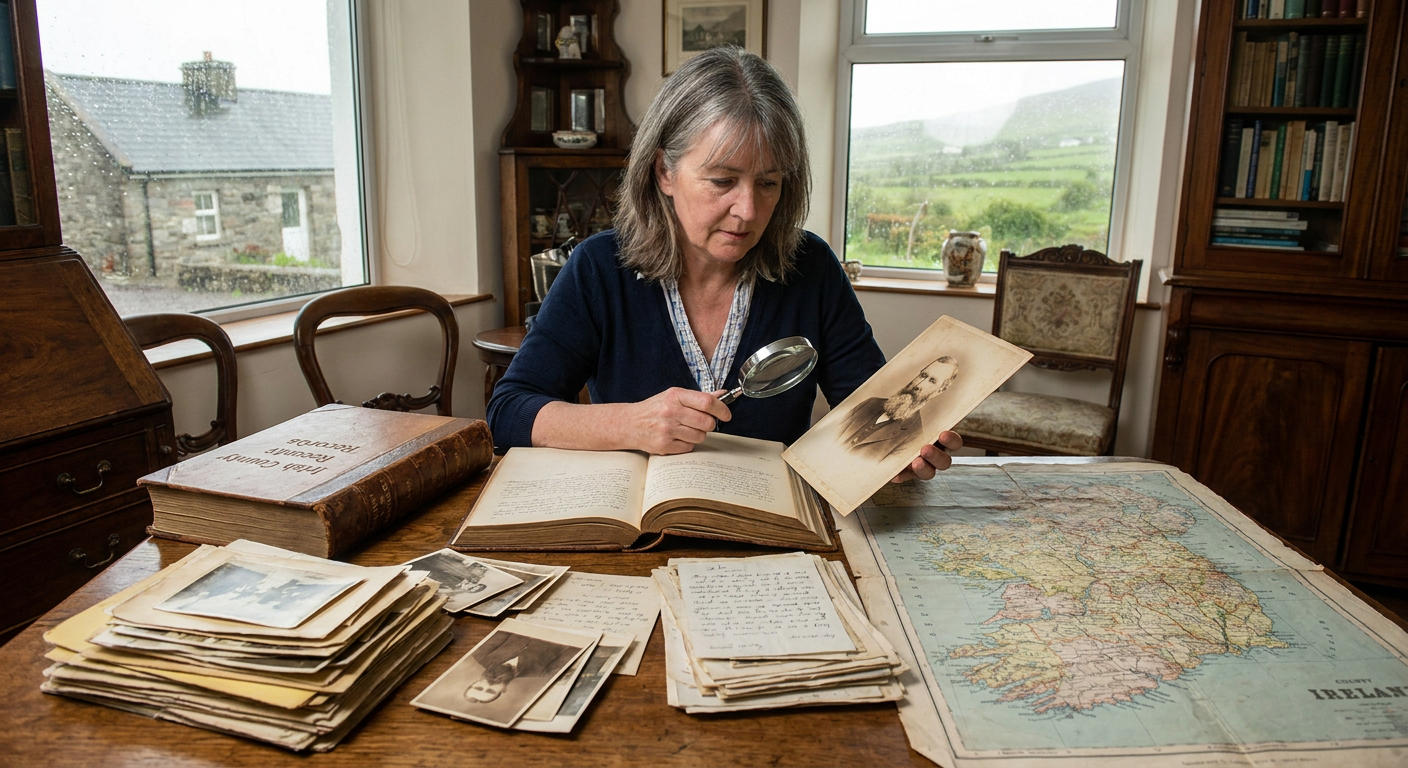
For centuries, faded photographs offered the only glimpse into the lives of ancestors, leaving their descendants to wonder about the color of their eyes, the texture of their clothes, or the subtle expressions that defined them. That landscape is now changing. The rise of artificial intelligence in genealogy is bridging the visual gap to the past, offering stunning new ways to connect with those who came before, particularly for those with deep Irish roots.

While the idea of an AI generating a photorealistic portrait of an ancestor from a DNA strand belongs to science fiction, the current reality is no less remarkable. AI does not predict faces from thin air; instead, it breathes new life into the historical artifacts researchers already possess, transforming genealogy from a paper chase into a deeply visual and emotional experience.
Key Takeaways
- Visualizing the Past: Artificial intelligence is revolutionizing family history research, moving beyond record transcription to the visual restoration and animation of historical photographs.
- Practical Magic: While AI cannot yet accurately predict a specific ancestor's face from DNA alone, its true power lies in enhancing, repairing, colorizing, and animating old family photos with incredible realism.
- Irish Research Aid: For those researching Irish heritage, AI serves as a powerful assistant. It helps decipher challenging historical records and analyze DNA results to reveal clues about origins and family connections, which can lead to the discovery of new photos.
- Ethical Considerations: The use of AI to recreate visual or audio likenesses of ancestors requires thoughtful engagement. These technologies are best viewed as tools for connection and discovery, not as infallible historical authorities.
The New Frontier: AI and the Art of Genealogy
Artificial intelligence in the context of family history refers to sophisticated algorithms designed to perform tasks that typically require human intelligence, such as recognizing patterns, deciphering language, and improving images. For years, genealogists have benefited from basic digitization and optical character recognition (OCR) that make searching records possible. Today’s AI goes much further.
From Data to Visuals
Modern AI can interpret the content of historical records, suggest connections between family trees, and, most visually, restore the richness of old photographs. This represents a significant leap from simply providing searchable text.
The Power of Photo Enhancement
One of the most impactful applications is the ability to colorize black-and-white photos automatically. The result is a vibrant, lifelike image that can feel as if it were taken yesterday. This technology allows us to see our ancestors not as distant figures in monochrome, but as living people in a colorful world. Further innovations are even allowing researchers to repair scratches and creases on damaged photos and animate the faces of relatives in still pictures, creating uncanny but powerful moments of connection.
Visualizing Your Irish Heritage: From Dream to Reality
So, can AI truly show you what your great-great-grandfather from County Cork looked like? The direct answer is nuanced. AI provides the next best thing to pure prediction, and arguably something more authentic: it enhances the actual images of your ancestors.
What AI Can and Cannot Do
AI cannot currently generate a unique, accurate facial portrait from a DNA sample. The genetics that determine complex facial structures are exceptionally intricate. While scientific understanding is constantly growing, reliably predicting a specific, unique face from DNA alone remains beyond the scope of current technology. What AI can do, however, is work with the visual information you already have.
Bringing Old Photographs Back to Life
The details are lost to time, damage, and the limitations of early photography. This is where AI excels. With powerful photo enhancement features, you can:
- Sharpen Focus: Bring blurry faces into crisp, clear view, revealing subtle expressions and features you never noticed.
- Add Realistic Color: Transform a black-and-white image into a full-color portrait. Was his hair red? Were his eyes blue? AI makes an informed deduction based on vast datasets, lending startling realism to the image.
- Animate Their Expression: Features like LiveMemory™ can take a static portrait and create a short video of your ancestor smiling, blinking, and turning their head. For many, seeing this movement is a profoundly emotional experience, creating a tangible link across generations.
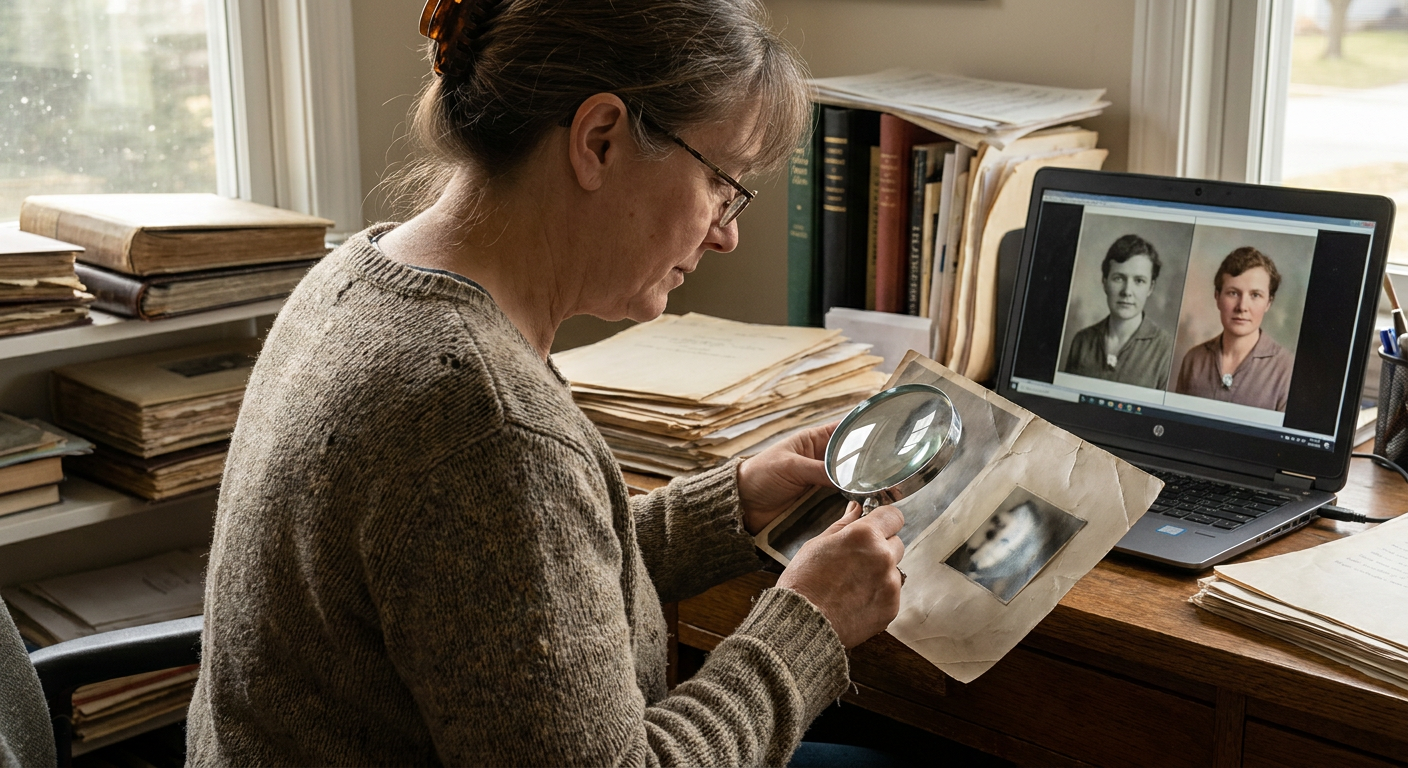
These technologies don't invent a person; they reveal the person who was already there, hidden beneath layers of aging and decay on a physical photograph. The most reliable path to visualizing an ancestor remains finding an existing photo and bringing it to life with these modern capabilities.
How AI Helps Uncover Elusive Irish Records
Before you can enhance a photo, you must first find it. The search for Irish family history can be complex, but AI is becoming an indispensable assistant.
Overcoming Historical Hurdles
This record gap makes the surviving documents even more valuable and the search more complex. AI-powered search algorithms are more effective at reading old, stylized handwriting and can identify potential matches even with misspelled names or transcription errors, a common issue in Irish records.
Key Irish Record Collections
Whether you're looking for a name like Carl Dryer or a more common Irish surname, AI can help you search through key record sets more effectively:
- Griffith's Valuation (1847-1864): This comprehensive land survey acts as a crucial census substitute for mid-19th century Ireland.
- Tithe Applotment Books (1823-1837): These records list land occupiers who were required to pay tithes to the Church of Ireland.
- Roman Catholic Parish Registers: For many Irish, these church records of baptisms, marriages, and burials are the only source of vital information before civil registration began in 1864 for non-Protestants.
Instead, it’s about using a smarter tool to search historical records to sift through the available data, pointing you toward documents you might have otherwise missed. It’s a partnership between human expertise and machine efficiency.
Your Irish DNA and the Clues Within
DNA testing offers another powerful angle for visualizing your heritage. While a DNA test can't print a portrait, it provides two critical types of clues: ethnic origins and cousin connections.
Pinpointing Your Origins
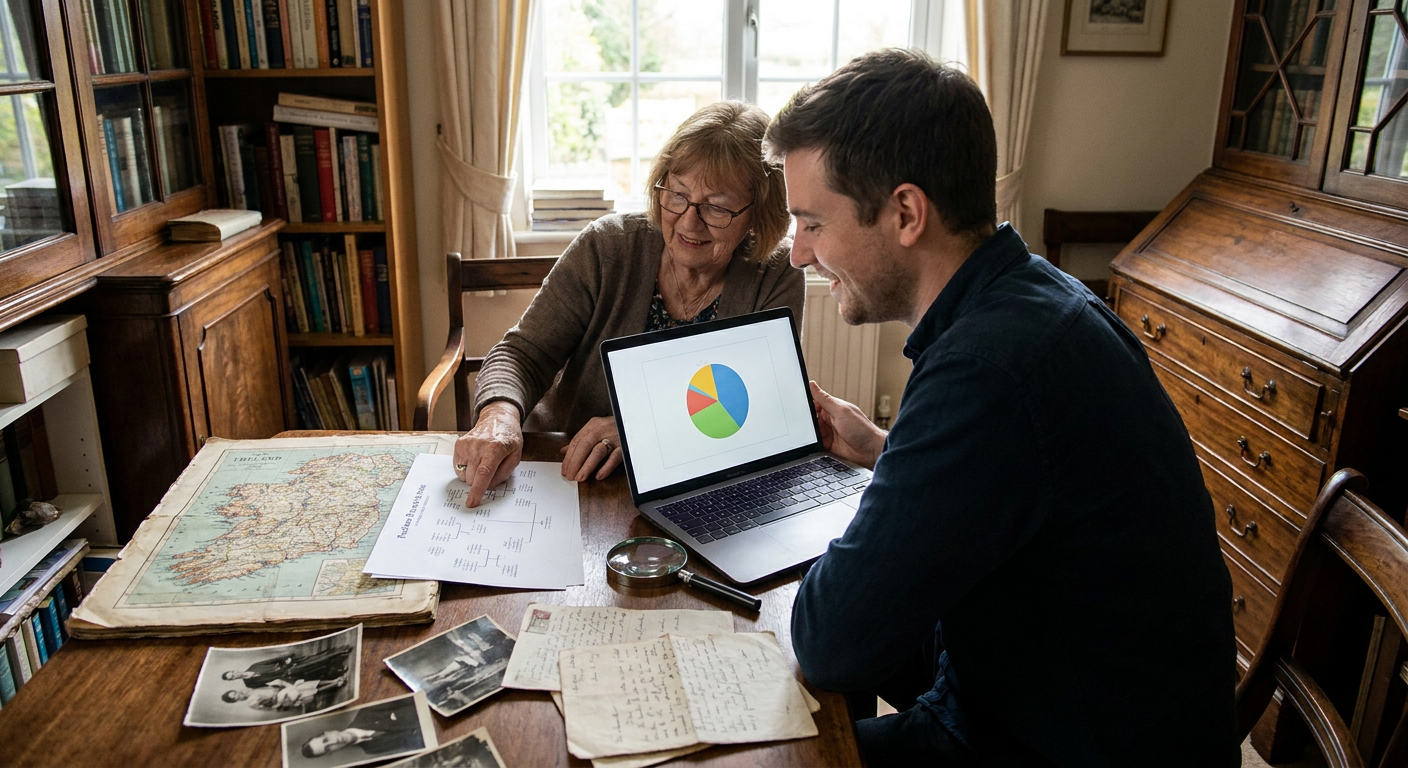
An Ethnicity Estimate breaks down your background and can confirm your connection to Ireland. More advanced results may even connect you to specific Genetic Groups, identifying your potential origins with surprising geographic precision, such as "County Mayo" or "Eastern Ulster."
Connecting with Living Relatives
This is often the most direct route to seeing your family’s past. A third or fourth cousin you discover through a DNA match may have the very family Bible or photo album you’ve been searching for. By connecting with relatives, you can pool your resources and share images that can then be enhanced and colorized using AI, opening up a visual history for the entire family.
The Human Element: Ethical AI in Genealogy
As technology allows us to recreate our ancestors’ likenesses and even their voices, important ethical questions arise. Is it respectful to animate a photograph of someone who never consented to it? Does an AI-generated voice truly represent an ancestor? These questions are at the heart of the modern genealogy experience.
Intent and Respect in Visualization
The consensus among leading platforms and ethicists is that user intent and respect are paramount. When used as a tool to foster a personal connection or spark curiosity in younger generations, AI visualization can be a beautiful tribute. The danger lies in presenting these recreations as historical fact or allowing them to replace the authentic, messier story of a person's life. The AI is an assistant, a powerful but imperfect lens through which we can view the past. As researchers, we must provide the context, the respect, and the human understanding.
Ultimately, the quest to visualize our ancestors is a profoundly human one. We seek to know not just their names and dates, but to see them as they saw themselves. AI can’t read minds or travel through time, but it can peel back the layers of age from a precious photograph, restore a hint of color to a faded world, and in doing so, bring us a little closer to the people who made us who we are.
Frequently Asked Questions