English
The initial thrill of a DNA test often gives way to a profound sense of mystery, presenting a list of unknown relatives and ancestral origins without a story to connect them. This collection of raw genetic information, a puzzle of shared heritage, remains incomplete without the historical framework that traditional genealogy provides. Your DNA matches are merely points on a map, and only by drawing the roads between them with ancestral records can a true picture of your lineage begin to emerge. This powerful synthesis transforms abstract genetic data into a personal narrative, revealing how individual family stories intersect to create your unique identity.

Integrating DNA results with a documented family tree creates a powerful and dynamic feedback loop. Your genealogical research, represented by the tree, provides a set of hypotheses about your ancestry. The DNA results then act as a scientific test of those hypotheses, either confirming or challenging the connections you have made. In turn, the tree provides the necessary historical and biographical context for your DNA matches, helping you identify common ancestors and understand the nature of your relationships.
This process elevates a family tree beyond a simple chart of names and dates. It becomes a living blueprint of your genetic inheritance, where each ancestor represents a potential source of the DNA you share with your matches. The paper trail of historical records explains why you are related to someone, while the genetic evidence proves that you are. This synergy between two distinct fields of research is the very foundation of modern genealogy.
Key Takeaways
- Linking DNA results to a family tree provides essential context, turning a list of genetic matches into a verifiable family narrative.
- A documented family tree helps you identify the Most Recent Common Ancestor (MRCA) you share with a DNA match, confirming your relationship.
- Automated features can analyze your family tree and your match’s tree to suggest how you might be related, complete with supporting historical records.
- The process helps validate your genealogical research, correct errors, and break through brick walls where paper trails have gone cold.
Why Linking DNA to a Family Tree is Essential
The fundamental purpose of linking your DNA to a family tree is to give your genetic connections context. Without a tree, a DNA match is just a name and a number, a certain amount of shared DNA measured in centimorgans. This measurement provides a statistical estimate of a relationship, but it cannot on its own distinguish between a second cousin and a first cousin once removed, for instance. You might see you share 200 cM with a "John Smith," suggesting a second or third cousin relationship, but who is he and how do your family stories intersect? A family tree is the key that unlocks this mystery, providing the ancestral map needed to navigate your results.
When you and your DNA match both have family trees, genealogical platforms can automatically cross-reference them for common surnames, locations, and ancestors. This process relies on sophisticated algorithms that search for patterns and overlapping data points between the two trees. The system methodically compares your ancestral information against your match's information, looking for a logical point of intersection. It moves beyond speculation and provides a documented hypothesis for you to explore. For example, the system might show that your great-great-grandmother and your match’s great-great-grandfather were siblings, instantly solving the puzzle of your connection.
Building out your tree with as much detail as possible dramatically increases the chances of these automated discoveries. This means researching not just your direct ancestors, but also their siblings, spouses, and children, who are known as collateral lines. These relatives are genetically related to you and are just as likely to have descendants who have taken a DNA test. Every name you add to your tree is another potential connection point, creating a wider net to catch new genetic cousins. A well-researched, broad family tree is therefore one of the most effective tools for making sense of your DNA match list.
How to Link Your DNA Results to Your Tree
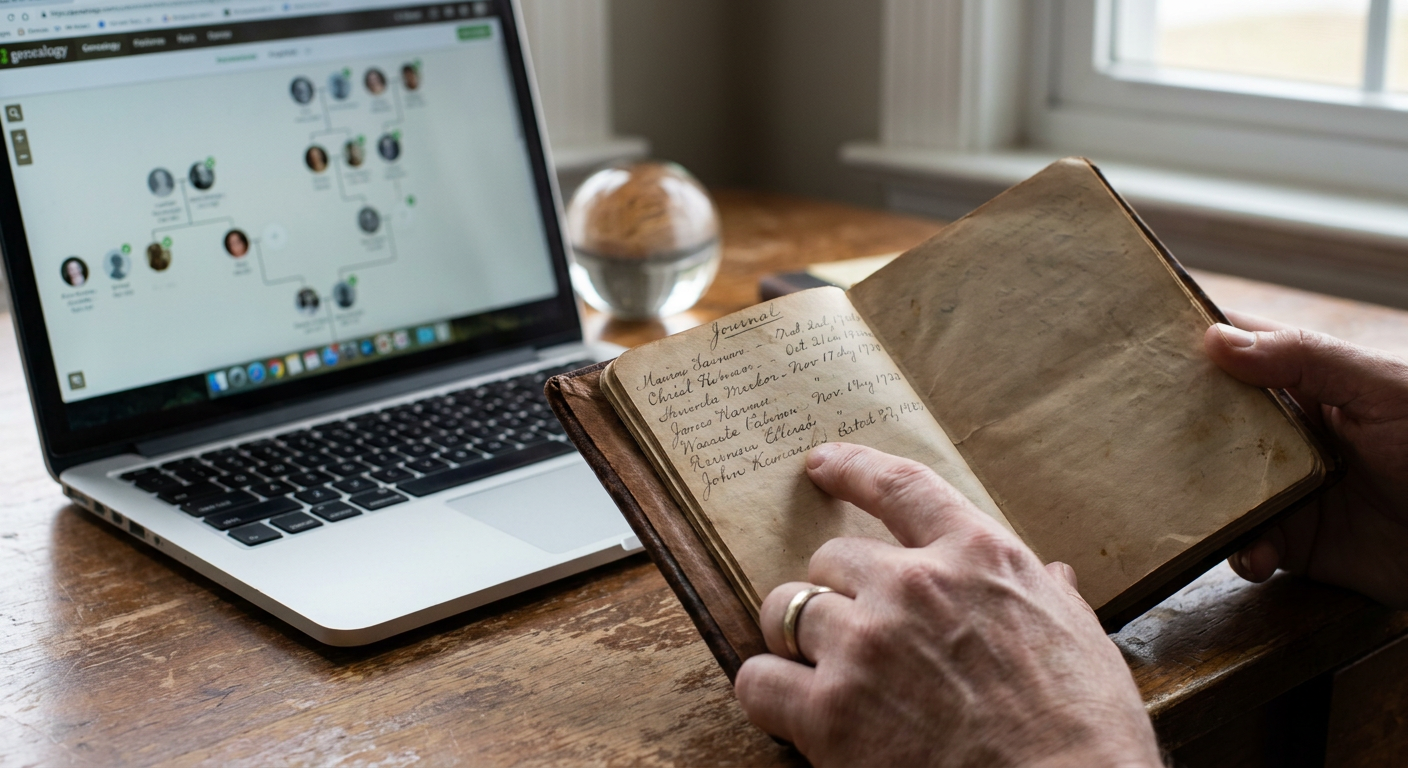
Getting started is a straightforward process designed to be accessible even for beginners. Once you have received your DNA results, most services provide a simple interface to associate them with a specific individual in your online family tree. This usually involves navigating to your profile page within the tree and selecting an option to link your test. You are the starting point, or "anchor," for this entire process, so you will link your results to your own profile in the tree. This establishes the baseline from which all genetic relationships will be measured.
From there, the goal is to associate other DNA matches with their corresponding profiles in your tree. If you identify a known cousin from your DNA match list, you can manually link their results to [their profile in your tree]. This simple action has powerful ripple effects across your entire match list. By confirming this known relationship, you help algorithms better understand your family’s unique genetic landscape. It establishes a proven branch, which can help the system sort many of your other, unknown matches into paternal and maternal sides, making it easier to place distant relatives who are related through that same lineage.
The process often involves a simple drag-and-drop interface or a search function that allows you to find the correct person in your [tree and create the link]. This is not a task that is completed once and then forgotten. As you confirm more matches, your tree becomes a living document, constantly enriched by new genetic information and evolving with each new discovery. Over time, your tree transforms from a static record of the past into a dynamic tool for future research, continuously interacting with inherited clues.
Using DNA and Trees to Break Through Brick Walls
Every genealogist eventually hits a "brick wall," which is a stubborn research problem that seems to have no solution using traditional records alone. Perhaps you can’t find a great-grandfather’s parents, determine a female ancestor’s maiden name, or trace a family back to their country of origin. These challenges often arise due to missing, destroyed, or unrecorded documents, leaving a frustrating gap in the family story. This is precisely where the synergy between DNA and family trees shines brightest, offering a new way to solve old mysteries.
Start by identifying a group of DNA matches who you believe descend from the same mystery ancestor. By examining the family trees of these matches, you can look for a common ancestral couple that appears in all their lineages. The underlying principle is that if several people who are genetically related to you all descend from the same identified couple, it is highly probable that you do as well. If many of your matches descend from a "Miller" family in Bavaria, and you know your ancestor came from that region, you have a powerful clue. You can then use historical records to try and connect your own line to that specific Miller family, focusing your search with newfound precision.
This technique, known as "triangulation," uses at least three people (you and two other matches) who all share DNA with each other to confirm a common ancestor. When all three individuals descend from the same ancestral couple through different children, it provides strong evidence for that connection. Features that allow you to compare shared matches and view their family trees are indispensable for this work. Attaching DNA results to your public or shared tree also makes it easier for other researchers to do the same, creating a collaborative environment where everyone’s discoveries can potentially benefit everyone else.
The Future of Genetic Genealogy
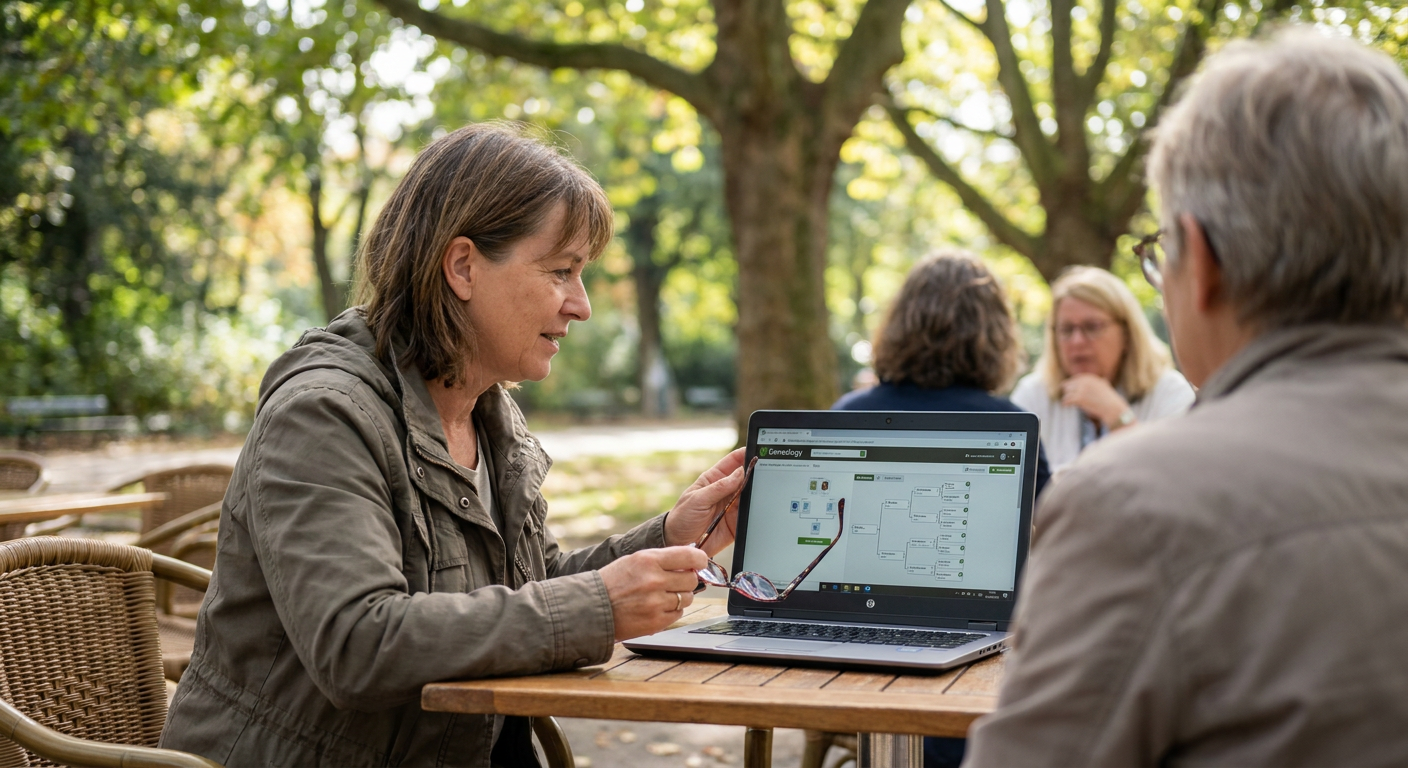
The trend in genetic genealogy is clear: deeper integration and more powerful automation. As more people take DNA tests and build out their family trees, the datasets that fuel discovery tools grow exponentially. This creates a powerful network effect, where each new user and each new piece of data added to the system increases its value and accuracy for all participants. This growth leads to more frequent and more accurate relationship predictions, as well as a greater chance of finding matches who hold the key to your research questions.
Innovations will continue to simplify what was once highly complex and manual analysis. We are already seeing the emergence of features that can build entire family tree branches based on genetic data alone, complete with source citations from historical records. Conceptually, these tools work by identifying genetic clusters of related individuals and then scanning their trees for common ancestors. The technology then searches vast digital archives for documents that support the proposed family structure, presenting it to the user as a well-reasoned hypothesis. Platforms are getting better at identifying shared ancestor hints, which alert you when you and a DNA match appear to have the [same person in your trees].
Furthermore, for those who tested with other services, the ability to upload DNA data to different platforms allows researchers to fish in multiple ponds. Each testing company has a unique database of users, and a cousin who could solve your mystery might have tested with a different service than you did. Transferring your data maximizes your chances of finding genetic relative matches across the entire genetic genealogy ecosystem. Throughout this process, the privacy of this sensitive information remains paramount.
Leading platforms are built with a strong commitment to privacy, ensuring that users have full control over their data and how it is shared, including options for anonymity and consent-based sharing. You can review a platform’s privacy policy to understand these protections.
Ultimately, the convergence of DNA and traditional genealogy is not just about finding more names to add to a chart or a database. It is about the profound act of verifying family stories, discovering new ones, and forging a tangible, personal connection to the people who came before us. This process transforms history from an abstract subject into a deeply personal narrative. By grounding our genetic code in the context of our ancestors' lives, we gain a richer understanding of who they were, what they experienced, and how their journey led to our own existence through the inheritance of nucleotide bases.
Frequently Asked Questions