English
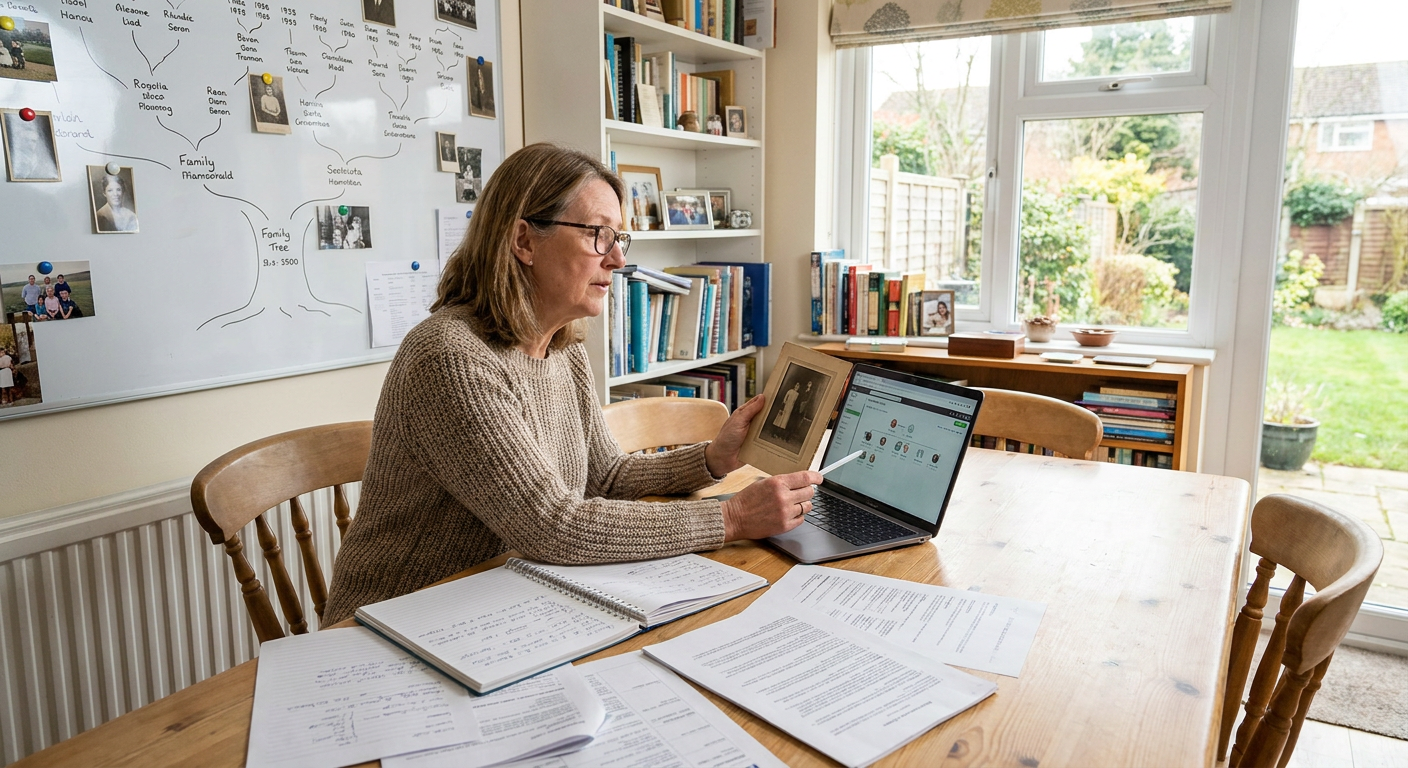
Receiving your DNA test results is an exciting moment, opening a new window into your heritage. While an ethnicity estimate provides a fascinating overview of your origins, the real power of genetic genealogy is unleashed when you connect those results to a meticulously built family tree. By linking DNA to your tree, you move from knowing where your ancestors came from to discovering who they were.

Key Takeaways
- Verification: Linking DNA allows you to confirm the paper trail of your family tree research by identifying genetic relatives who share a common ancestor.
- Discovery: Features that analyze your tree and your DNA matches' trees simultaneously can suggest how you are related, uncovering connections you might have missed.
- Collaboration: A linked tree provides context for your DNA matches, helping them understand your shared heritage and encouraging collaboration.
- Biological Focus: For best results, the family tree linked to your DNA should prioritize your direct biological relatives.
Why Linking DNA to Your Tree is a Game-Changer
Linking your DNA results to a family tree creates a powerful feedback loop. The tree provides genealogical context, and the DNA provides genetic proof. This connection enables advanced platform features that automatically suggest how you and a DNA match might be related. This synergy transforms two separate sets of information into a cohesive research tool. The tree offers a human narrative of names and relationships, while DNA offers an objective layer of scientific validation, each making the other more powerful.
This dynamic interplay allows you to move beyond speculation and toward confirmation. For instance, a historical document might suggest a particular ancestral connection, but documents can be ambiguous or incorrect. A corresponding DNA match with a descendant of that same proposed ancestor can provide strong evidence that your documentary research is on the right track. Conversely, a strong DNA connection to another user can guide your research toward family lines you had not previously considered, opening new avenues for investigation.
Without a linked tree, a list of DNA matches is just a collection of names. You might see a predicted relationship, like "2nd–3rd cousin," but you have no immediate way to know how you are connected. A detailed family tree provides the roadmap. When you and a DNA match both have well-researched trees, you can quickly identify the common ancestor you share, turning a genetic stranger into a confirmed relative. This context brings the list of matches to life, transforming it from genetic data into a network of extended family.
This process is foundational for solving genealogical mysteries. For adoptees searching for birth parents or researchers identifying an unknown great-grandparent, combining DNA evidence with family tree analysis is the most effective strategy. DNA points to potential family groups, and the trees of those matches provide the names, dates, and locations needed to pinpoint the exact connection. These genealogical puzzles, often called "brick walls," represent points where the paper trail runs cold. Genetic evidence can act as a key, unlocking these barriers by connecting you with living relatives who hold a different piece of the ancestral puzzle.
Step-by-Step: How to Link Your DNA and Family Tree
Following these steps will ensure your tree and DNA results work together seamlessly, maximizing your chances of discovery. A methodical approach is essential because automated tools that analyze your results rely on the quality and structure of the data you provide. Setting up this connection correctly from the start will save you from confusion later and yield more accurate and helpful insights.
Step 1: Build a Solid Foundation in Your Family Tree
Before you even think about DNA, your first task is to build a family tree as completely as possible. Start with yourself and work backward, adding parents, grandparents, and great-grandparents. Include full names, birth and death dates, and locations for each individual. The more detail you include, the easier it will be for automated systems and your human matches to find common ground. This disciplined, generation-by-generation approach ensures a logical structure and reduces errors.
Each piece of data you add serves a specific purpose in genetic genealogy. Full names are primary identifiers, dates help place individuals in a historical timeframe, and locations are crucial for identifying migration patterns and potential record sources. Accuracy is paramount, as a single incorrect name or date can send automated tools and your research in the wrong direction. Diligently sourcing this information from historical records builds a reliable foundation for your genetic discoveries.
Focus on building a biological tree. This means your tree should represent your direct genetic lineage. While it is important to honor all family relationships, such as those through adoption or marriage, the tree linked to your DNA should strictly follow the lines of genetic descent. This is because DNA matching algorithms are designed to detect biological relationships. Confusing these lines can prevent the system from correctly identifying shared ancestors and may produce misleading suggestions.
Step 2: Formally Link Your DNA to the Correct Tree
Once your foundational tree is in place, the next step is to perform the linking action on the DNA testing platform. Most services have a straightforward process within your account settings to associate your DNA results with a specific family tree. This is a crucial step that tells the system which data sets to analyze in tandem. Without this formal link, your tree and your DNA results will remain isolated, and you will not be able to access the integrated features.
It is critically important to ensure that your DNA kit is linked to the correct person within the family tree, which should be yourself. This action anchors the genetic data to a specific starting point in the genealogical chart. If you manage DNA kits for multiple family members, each kit must be linked to that individual’s corresponding profile in the tree. A common error is to accidentally link a parent's or sibling's DNA kit to your own profile, which will cause all subsequent automated analysis and relationship predictions to be inaccurate.
Step 3: Configure Privacy and Sharing Settings
After linking your tree, take a moment to review and configure your privacy settings. Genealogical platforms typically offer a range of options that allow you to control how much of your family tree information is visible to others, including your DNA matches. These settings can range from making your tree public to keeping it private, or a hybrid option where the tree is private but still searchable by the platform's matching algorithms.
Choosing the right privacy level involves balancing the desire for collaboration against personal comfort. A public tree offers the highest potential for discovery, as it allows DNA matches to easily browse your lineage and identify your shared connection, making them more likely to contact you. A more private setting protects the information of living relatives while still allowing automated tools to suggest shared ancestors. Consider your research goals and personal preferences carefully when making this decision.
[IMAGE_DESCRIPTION: A screenshot of a family tree interface, showing branching lines connecting boxes with names and dates, with a DNA helix icon overlaid to symbolize the connection.]
Step 4: Begin Exploring the Integrated Features
With your DNA results successfully linked to a well-researched family tree, you have unlocked a suite of powerful analytical tools. This is where your initial investment of time and effort begins to pay dividends. Navigating these features will allow you to systematically sort through your DNA matches, identify common ancestors, and begin to piece together the broader story of your family. The following sections will guide you through the most valuable features that become available after linking.
Exploring the Integrated Features
The true value of linking your tree and DNA emerges when you use the tools designed to synthesize this information. These features automate a significant amount of analytical work, presenting you with clues and suggestions that would have been nearly impossible to find manually. They function by cross-referencing your genetic data and your genealogical data against the data of thousands of other users on the platform.
Common Ancestor Hints
One of the most powerful features you will encounter is a tool that suggests common ancestors. These hints are generated when the system finds a DNA match between you and another user and also detects an identical ancestral couple in both of your linked family trees. The platform will then present this potential shared ancestor to you as a hint or theory of relationship, effectively showing you how you and your DNA match are likely related.
These automated suggestions are incredible time-savers, pointing you directly to the connection that might have taken you hours or days of manual research to uncover. They serve as excellent starting points for further investigation. However, it is essential to treat these hints as well-informed suggestions rather than absolute proof. You should always perform your own due diligence by examining the supporting evidence in both your tree and your match’s tree to confirm the suggested connection is accurate and supported by historical records.
Shared Matches and Family Groups
Another indispensable tool is the "shared matches" feature, sometimes called "in common with." This tool allows you to select one of your DNA matches and see a list of all the other people on the platform who share DNA with both you and your selected match. This is based on a simple but powerful principle: if a group of people all share DNA with one another, they most likely descend from a common ancestor or ancestral couple.
By analyzing these shared match groups, you can sort your extensive list of matches into distinct family branches. For example, if you know that a particular first cousin is on your father’s side, you can look at your shared matches with that cousin. This list of people will almost certainly be related to you through your father's lineage. This technique allows you to create genetic clusters, which you can then label and organize, making it far easier to determine which side of your family a new, unknown match belongs to.
Tree Analysis Tools
Beyond direct relationship hints, many platforms offer tools that analyze and compare the raw data within the family trees themselves. These features can automatically scan your tree and a match's tree for overlapping ancestral surnames. Seeing that you and a match both have ancestors with the same, less-common surname can be a powerful clue that points you toward the family line where your connection lies, even if you have not yet found the specific common ancestor.
Similarly, some tools provide a map-based view of shared ancestral locations. These features plot the birth locations of ancestors from your tree and your match's tree on a geographical map, highlighting places where they overlap. If you notice that you and a cluster of shared matches all have ancestors who lived in the same small county or parish during the same time period, it provides a strong geographical pointer for your research. This can help you focus your search for historical records in a specific area.
Best Practices for an Effective Linked Tree
To get the most out of your genetic genealogy experience, it helps to adopt a few best practices. These habits will ensure that your linked tree remains a powerful and accurate tool for discovery over the long term. A family tree is not a static project but a living document that grows and evolves as you learn more.
Focus on Biological Lines
As mentioned earlier, it is crucial to maintain a clear distinction between your biological family tree and your broader family history. The tree you link to your DNA must accurately reflect your direct genetic ancestors for the matching algorithms to work correctly. Including non-biological relatives, such as step-parents or adoptive parents, directly in the main parental lines can confuse the system and lead to incorrect or missed connections.
If you wish to document these important family relationships, consider Drawing Your Family Tree in a separate, more comprehensive chart that is not linked to your DNA results. Some platforms also allow for custom labels or notes where you can describe non-biological relationships without altering the primary structure of the tree. This approach allows you to honor your entire family story while preserving the scientific integrity of the tree used for genetic analysis.
Privacy and Sharing
Revisiting your privacy settings periodically is a good practice. As you become more comfortable with the process, you may decide to make your tree more public to enhance collaboration. A visible and well-documented tree acts as a beacon for other researchers. When your DNA matches can easily see your research, they are better equipped to understand the potential connection and are more likely to initiate contact and share their own findings.
Collaboration is a cornerstone of successful genealogy. No single person can uncover the entire story on their own. By sharing your tree, you are contributing to a collective effort and inviting others to contribute to yours. This reciprocal exchange of information is what enables the community as a whole to break through brick walls and piece together the vast, interconnected human family tree.
Keep Your Tree Updated
Your family tree is a dynamic research project, not a one-time entry. Make it a habit to regularly update your tree with new discoveries, corrections, and additional details. Adding a new generation of ancestors, correcting a birth date, or adding a new location can have a ripple effect across the platform's ecosystem.
Every time you update your tree, the system's algorithms may re-evaluate your connections. A new piece of information might be the missing link that finally allows the system to identify a common ancestor with one of your matches, triggering a new hint. Regularly maintaining your tree ensures that you are always taking full advantage of the platform's analytical power and maximizing your chances for a new breakthrough.
Conclusion
The journey into your family's past is profoundly enriched when you combine the scientific precision of DNA with the narrative context of a family tree. While an ethnicity estimate can paint a broad picture of your origins, linking your DNA to your genealogical research transforms this picture into a detailed and personal portrait of your ancestors. This synthesis moves you beyond generalities and into the specific, verifiable details of your unique heritage.
By building a solid tree, leveraging integrated analysis tools, and embracing a spirit of collaboration, you turn a simple list of genetic matches into a vibrant network of relatives. This process unlocks the ability to verify old research, break through long-standing brick walls, and discover the names and stories of the people who came before you. Connecting your DNA to your family tree is the key that opens the door to a deeper and more meaningful understanding of who you are and where you come from.
Frequently Asked Questions