 English
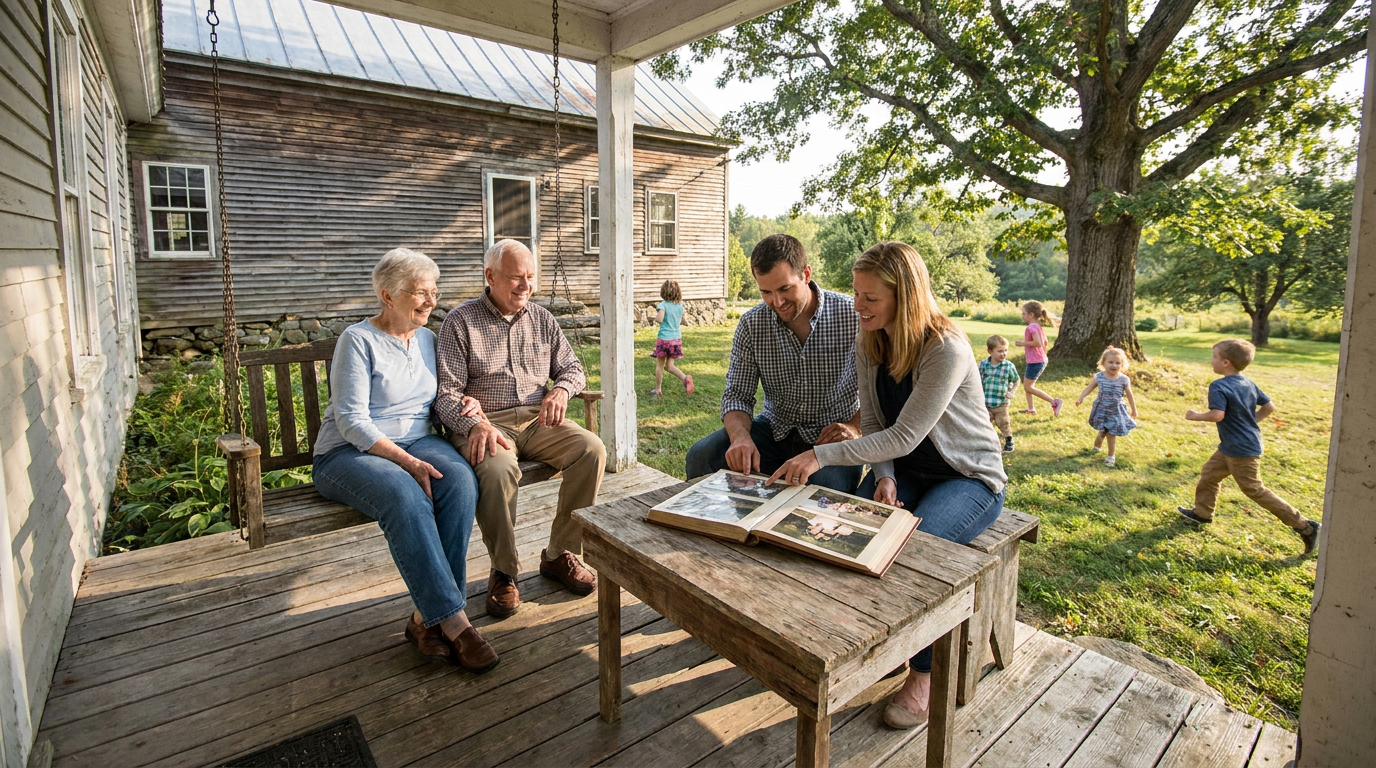
Your DNA test results have arrived, revealing a fascinating breakdown of your ethnic origins and connecting you with genetic relatives you never knew you had. But this is only the first step in a much deeper journey of discovery. A list of DNA Matches on its own provides names, but linking those results to a family tree provides the narrative, transforming raw genetic data into a rich, detailed story of your heritage.

Connecting your DNA to a family tree contextualizes your genetic connections, helping you understand precisely how you are related to your matches. It moves beyond a simple percentage of shared DNA to place individuals within the larger framework of your shared lineage.
Key Takeaways
- Context is Crucial: A DNA test provides a list of genetic relatives, but a family tree shows how they fit into your family's story.
- Biological Focus: When linking DNA, it's essential to build your tree based on biological relationships to ensure accuracy for genetic genealogy purposes.
- Advanced Tools: Platforms can leverage your linked tree and DNA data to automatically suggest how you might be related to your matches, complete with supporting evidence.
- Verification Power: Attaching DNA results to specific ancestors in your tree helps verify paper-trail research and confirm family lines with scientific evidence.
From Genetic Data to Family Narrative
A DNA test analyzes your autosomal DNA to identify segments you share with other people in a database. The amount of shared DNA, measured in centimorgans (cM), helps predict a potential relationship, from a parent or sibling to a distant cousin. However, these predictions are just that, predictions. They provide a range of possibilities, not a definitive answer.
Is this match a second cousin or a first cousin once removed? The DNA alone doesn't always make it clear.
This is where the family tree becomes indispensable. By linking a DNA Match to a specific profile in your tree, you move from the abstract to the concrete. You are essentially creating a hypothesis: "I believe this person is the great-grandchild of my great-grandfather's brother." As you and your match compare your respective trees, you can look for a Most Recent Common Ancestor (MRCA), the individual or couple from whom you both descend. Identifying the MRCA is the key to confirming your exact relationship and cementing that branch of your family's history.
For example, seeing a match with "180 cM shared" might be estimated as a second cousin. If you both have trees, you might quickly spot that your great-grandparents are siblings. Without the tree, it remains a guess based on probabilities.

Building the "Right" Kind of Tree for DNA
To effectively use a family tree for genetic genealogy, it must be structured correctly. The primary rule is to focus on biological relationships. For someone who is adopted or has unknown parentage, this means building a tree that reflects their genetic roots, even if it differs from the family that raised them. This biological focus is critical because DNA inheritance follows direct genetic lines. Including adoptive parents or step-relatives in a tree meant for DNA matching can confuse the algorithms that search for common ancestors and may lead to incorrect relationship theories.
When you link your DNA kit to your profile in a biological family tree, you enable powerful features that can analyze your connections. Many genealogy platforms allow you to link the profiles of your known relatives, such as parents and grandparents, to their own DNA kits if they have also tested.
Practical Steps for Linking DNA to Your Tree
- Start with What You Know: Begin by building your tree back as far as you can with known biological relatives. Add parents, grandparents, and great-grandparents with their birth dates, death dates, and marriage information. Include siblings for each ancestor, as this expands the network of potential cousins you might match with.
- Attach Your Kit: The first and most important link is attaching your own DNA kit to your profile in the family tree. This tells the platform who "you" are in the context of the tree structure and establishes the starting point for all relationship calculations.
- Link Known Relatives: If your parents, siblings, aunts, uncles, or other close relatives have tested, link their DNA kits to their corresponding profiles in your tree. This is one of the most powerful steps you can take, as it helps isolate specific family lines and validate connections with greater certainty.
- Analyze and Link Your Matches: As you review your list of DNA Matches, look for clues. Do you recognize a surname? Does their tree contain familiar locations or occupations? When you identify a potential common ancestor, you can add them to your tree and link their DNA match page directly to their new profile. This creates a permanent, visible connection between the genetic data and the genealogical record.
Validating Research and Breaking Down Brick Walls
While invaluable, these documents can sometimes contain errors, omissions, or even deliberate misinformation. DNA provides a scientific layer of verification.
Imagine you have traced your 3rd great-grandfather back to a specific town in Italy, but the records are ambiguous. If you then find several DNA Matches who all trace their own lineage back to that same man through different children, you have created a "genetic triangulation." The shared DNA between you and these cousins had to come from a common source, and the family trees point directly to that ancestor.
This same principle helps break down "brick walls"—seemingly unsolvable puzzles in a family tree. Perhaps you cannot find the parents of your great-grandmother. By examining the family trees of your top DNA matches on that line, you might discover that several of them descend from a specific couple. This gives you a powerful clue, suggesting that this couple may be your great-grandmother's parents or other close relatives. This turns a speculative guess into a targeted, evidence-based search.

Leveraging Technology to Bridge the Gaps
The integration of DNA and family trees has given rise to sophisticated features designed to do much of the heavy lifting for you. Some features use data points from family trees and historical records to propose plausible relationship paths between you and a DNA Match.
They can point you toward records you might have missed or suggest connections that were not immediately obvious.
The Future of Genetic Genealogy
The trend in genetic genealogy is clear: integration is everything. As more people test their DNA and build out their family trees, the interconnected web of data grows richer and more powerful. Every new tree and every new DNA kit added to the global database increases the chances that a computer-assisted theory can solve a long-standing family mystery.
Looking ahead, we can expect even tighter integration. Imagine future features that can flag inconsistencies between your DNA results and your tree in real-time, or suggest which specific historical record collections are most likely to help you connect with a particular group of genetic matches based on their shared ancestral locations. The synergy between genetics and traditional genealogy is only just beginning to be fully realized.
By linking your DNA results to a meticulously built family tree, you contribute to this ecosystem while simultaneously unlocking the full potential of your own genetic data. You transform a list of names into a vibrant, interconnected story of your family, confirming old knowledge and discovering new chapters you never knew existed.
Frequently Asked Questions
