English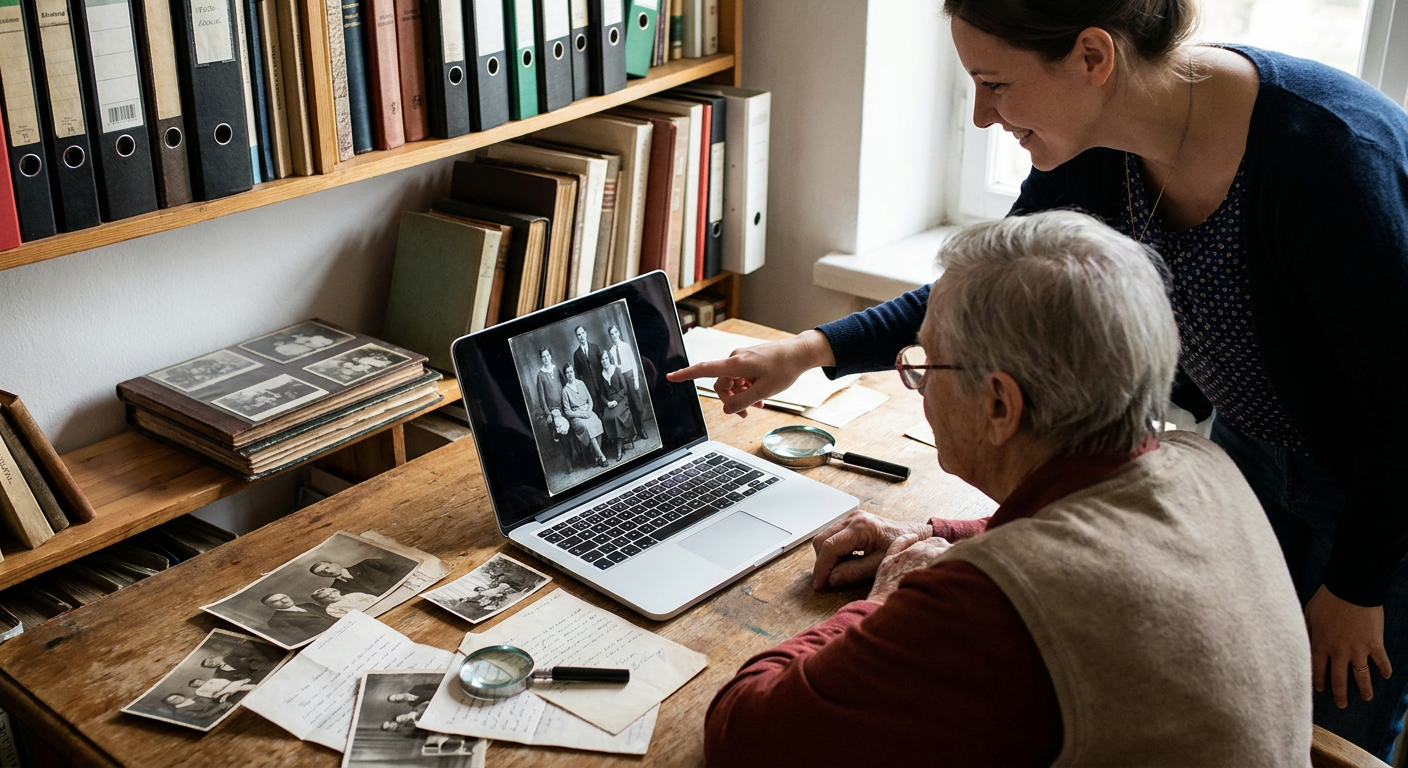
Old family photographs are silent storytellers, frozen moments that offer a tantalizing window into the lives of our ancestors. For generations, these black-and-white or sepia-toned portraits have been cherished heirlooms, yet they often feel distant, separated from us by a historical and technological gulf. Groundbreaking advancements in artificial intelligence are now changing that relationship. AI-powered photo restoration and animation technologies are breathing new, vibrant life into these static images, allowing us to connect with our family history in a way that feels astoundingly immediate and deeply personal.

Key Takeaways
- AI technology can digitally repair, colorize, and enhance old, faded, and damaged family photographs with remarkable accuracy.
- Sophisticated AI animation can transform still portraits into short, lifelike video clips, showing ancestors smiling, blinking, and turning their heads.
- These features create a powerful, emotional connection to the past, making ancestors feel more real and relatable to modern generations.
- The process is highly accessible, allowing anyone to transform their family photos in just a few steps on platforms that offer these advanced features.
The Dawn of a New Visual History
For anyone with a shoebox of old family photos, the familiar signs of age are part of their charm: creases, fading, scratches, and the monochrome palette of a bygone era. While these artifacts are priceless, they can also create a sense of distance. It can be challenging to see the living, breathing person behind the stiff pose and the faded emulsion. Artificial intelligence is changing this by analyzing, interpreting, and reconstructing these images in ways that were once the exclusive domain of professional photo restoration artists.
Understanding AI Photo Restoration
AI photo restoration refers to a suite of technologies that use machine learning algorithms to improve the quality of old photographs. The purpose of this technology is not to replace the original family photo with a synthetic, AI-generated picture. Instead, the goal is to bring the authentic photo back to life, honoring its history while improving its quality, clarity, and resolution. Digital heritage is a digital bridge to the moment the shutter clicked, clearing away the fog of time.
From Monochrome to Magnificent: The Power of AI Colorization
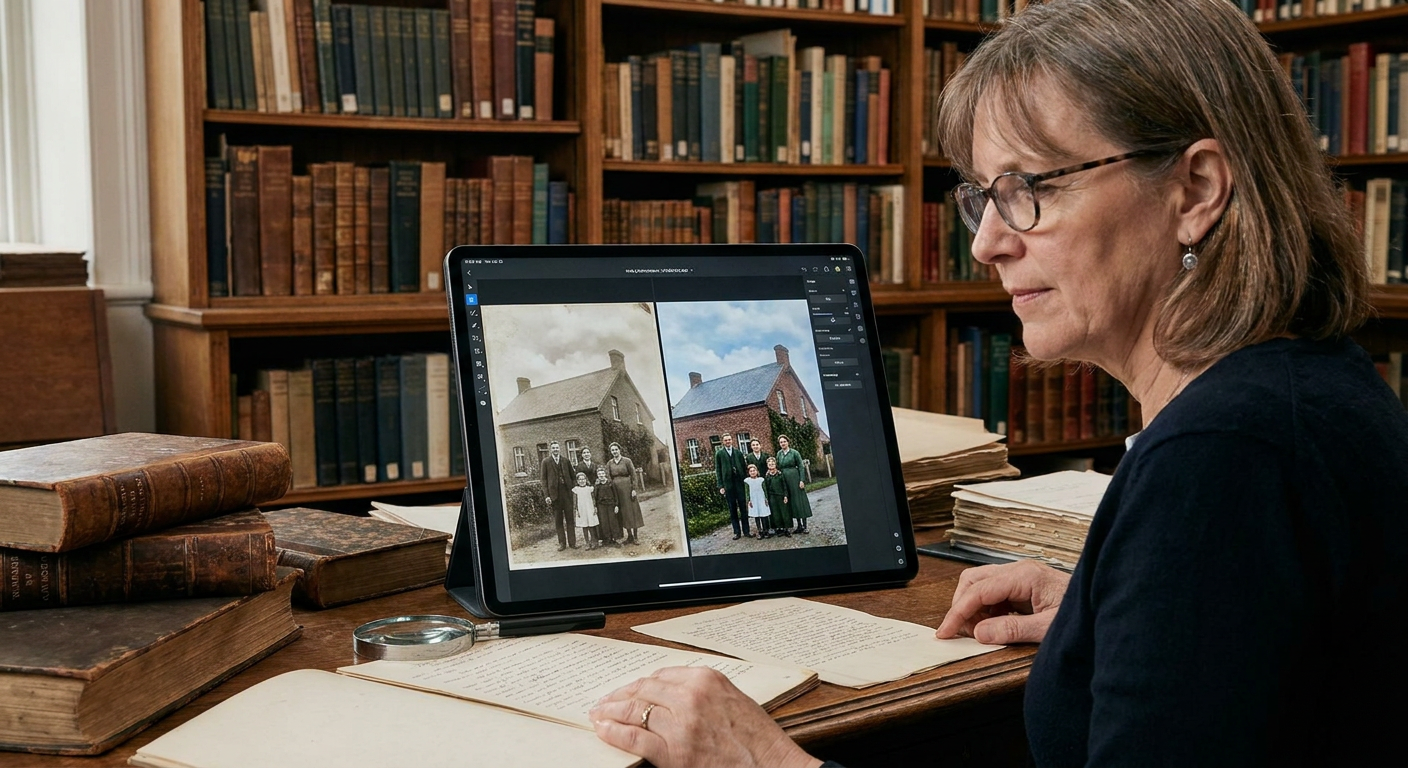
A black-and-white photograph captures light and shadow, but it leaves the colors of the world to our imagination. AI colorization fills in those blanks with astonishing realism. By analyzing the grayscale values and the context of the image, AI models can intelligently predict and apply accurate colors, from the precise shade of a military uniform to the subtle hues of a flower garden. The process can turn a distant historical document into a vibrant scene that feels like it could have been taken yesterday.
How AI Adds Color
The most common question regarding AI colorization is how the algorithm "knows" what colors to use. Through this process, they learn the typical colors of common objects: skies are blue, foliage is green, brick is reddish-brown. The AI also analyzes contextual clues within the photo itself. It might recognize a clothing style from the 1940s and apply a color palette common to that era.
When a faded photograph blinks back at you for the first time, it helps preserve cherished memories in a fresh and vivid way. This technology makes the past feel closer and more accessible, especially for younger generations who may find it difficult to connect with monochrome images.
Repairing the Scars of Time and Sharpening Focus
Beyond color, AI’s greatest strength may be in its ability to repair damage. Over the decades, photos can suffer from tears, water spots, mold, and severe fading. Manually fixing these issues is a painstaking, time-consuming process requiring a skilled professional. AI, however, can accomplish this in seconds.
The technology effectively "inpaints" the damaged areas, using information from the surrounding pixels to reconstruct what was lost. Scratches vanish, tears are seamlessly mended, and faded faces regain their definition.
Erasing Blemishes and Enhancing Clarity
Many older photographs are slightly out of focus due to the limitations of early cameras. The unique optical characteristics of vintage lenses often produced a particular type of blur or grain structure across the image. Modern AI photo enhancement features can address this by intelligently sharpening the entire photograph, bringing faces and key details into crisp focus. This process doesn’t just make the photo look better; it can reveal subtle expressions and details that were previously invisible, offering new clues for the family historian. A sharpened image might suddenly make a previously illegible name on a storefront sign readable, reveal the insignia on a uniform, or clarify the intricate pattern of an heirloom quilt.
A Practical Guide to Reviving Your Family Photos
Bringing these powerful AI features to your own photo collection is a straightforward process. The technology is designed to be user-friendly, allowing anyone to achieve remarkable results without any technical expertise. The entire process can often be completed in just a few simple steps.
Step 1: Digitize Your Original Photographs
Before any digital work begins, the first crucial step is to create a high-quality scan of your original photo. This creates a digital copy that you can work with, ensuring the precious original print is kept safe from any potential harm. For the best results, use a flatbed scanner to capture a high-resolution image. Many modern mobile apps also offer powerful scanning features that can digitize photos quickly and effectively.
Step 2: Upload to an AI Photo Platform
Once you have your digital file, the next step is to upload it to a platform that offers AI photo features, such as the suite of tools on MyHeritage. This is typically a simple process of selecting the file from your computer or even just dragging and dropping it into the web browser.
Step 3: Apply Enhancements with a Single Click
With your photo uploaded, you can now apply the AI features. Platforms offering these services have made the process incredibly intuitive. You’ll typically see buttons to "Colorize," "Enhance," or "Repair" your image. With a single click, the AI gets to work, analyzing the photo and applying the complex corrections automatically. In moments, you will see the transformed image.
Step 4: Animate and Share Your Revived History
After restoring the image quality, you can take the final, magical step of animating your ancestor. Features like Deep Nostalgia™ can be applied to your newly restored photo to create a short video of your ancestor smiling and moving. It is a powerful way to feel a more personal connection. Once complete, you can download the enhanced photos and animated videos to share with your family and preserve for future generations.
The Ultimate Connection: Bringing Ancestors to Life with Animation
The most revolutionary development in this field is AI-powered photo animation. This technology takes a static portrait and, using a library of pre-recorded human movements, creates a short, high-quality video loop. The person in the photo can be seen blinking, tilting their head, and offering a gentle smile. The process turns a still, silent image into a short, compelling video clip, making it feel like you are getting a fleeting glimpse of an ancestor in motion.
The Magic of Movement
Technologies like Deep Nostalgia™ have captured the world’s imagination by turning still portraits into animated sequences. The resulting short videos allow you to experience your family history like never before, watching your ancestors’ faces move in a way that feels hauntingly real. For many, the experience is deeply emotional, with older, more formal portraits often producing the most moving results. Other animation features, like LiveMemory™, can animate an entire photograph, creating a small window into a moment in time.
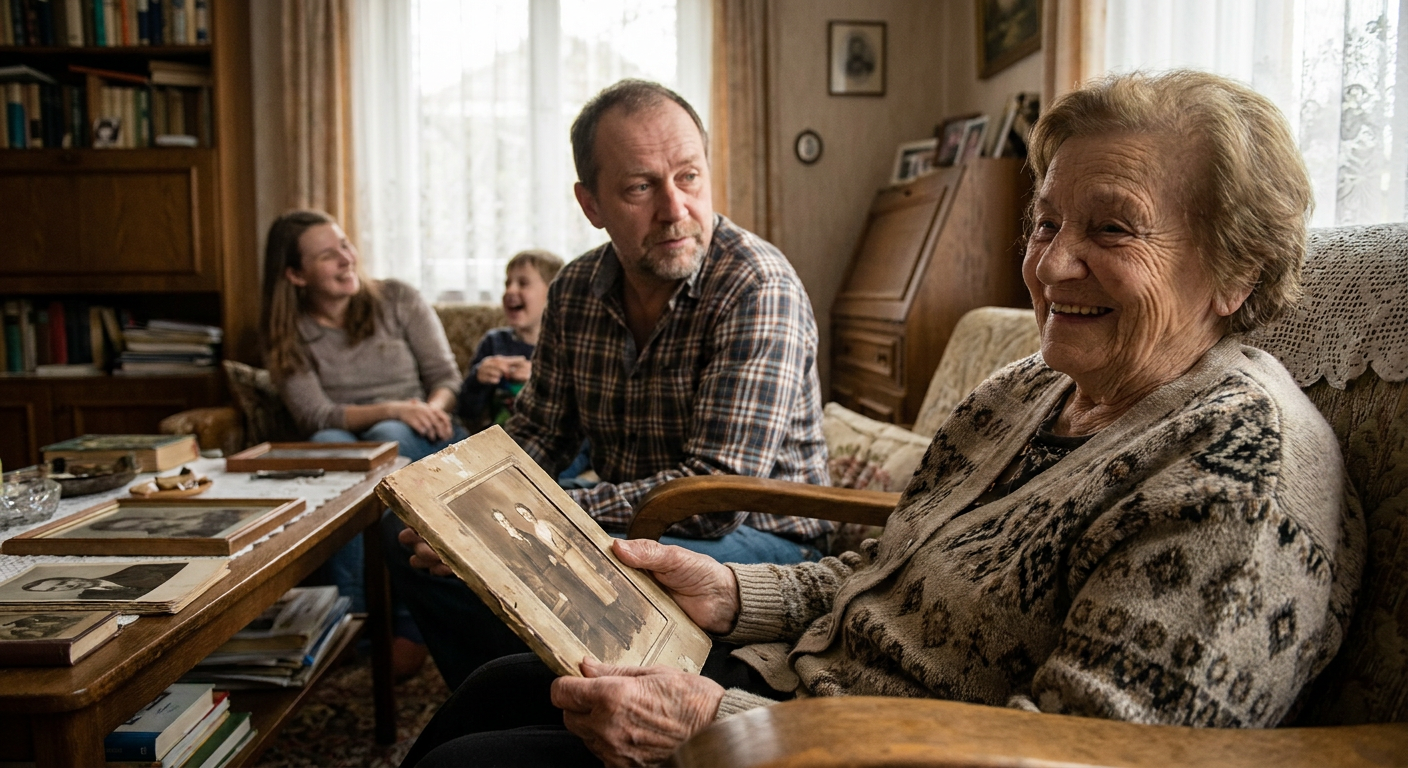
Watching a great-grandmother smile or a long-lost uncle glance around the room creates a connection that text and still images alone simply cannot replicate. As the technology continues to evolve, AI is fundamentally reshaping how we interact with our own heritage and the people who came before us.
A Responsible Gaze into the Past
As with any powerful new technology, the rise of AI photo manipulation invites important ethical questions. When we colorize or animate an ancestor, are we creating a more authentic connection or an artificial one? This is a central discussion in the genealogy community today, echoing debates around whether an AI should be allowed to speak for the dead. The key lies in approaching these features with both curiosity and a critical understanding.
Balancing Authenticity and Enhancement
The goal of AI photo restoration is not to create a false historical record but to use technology to bring photos back to life in a new, more engaging way. It is vital to view the enhanced images as interpretations, not as gospel truth. They are powerful tools for engagement and storytelling. Best practices in responsible AI photo restoration recommend always making digital copies for editing and handling the original, physical photos with great care.
It is also crucial that platforms and users clearly identify which images have been altered by AI, ensuring that future generations can distinguish between the original photograph and its AI-enhanced counterpart. Used thoughtfully, AI provides an unprecedented way to see our ancestors through a modern lens, making them more than just names on a family tree. It provides a new and profound way to honor their memory and share their stories for generations to come.
Frequently Asked Questions