English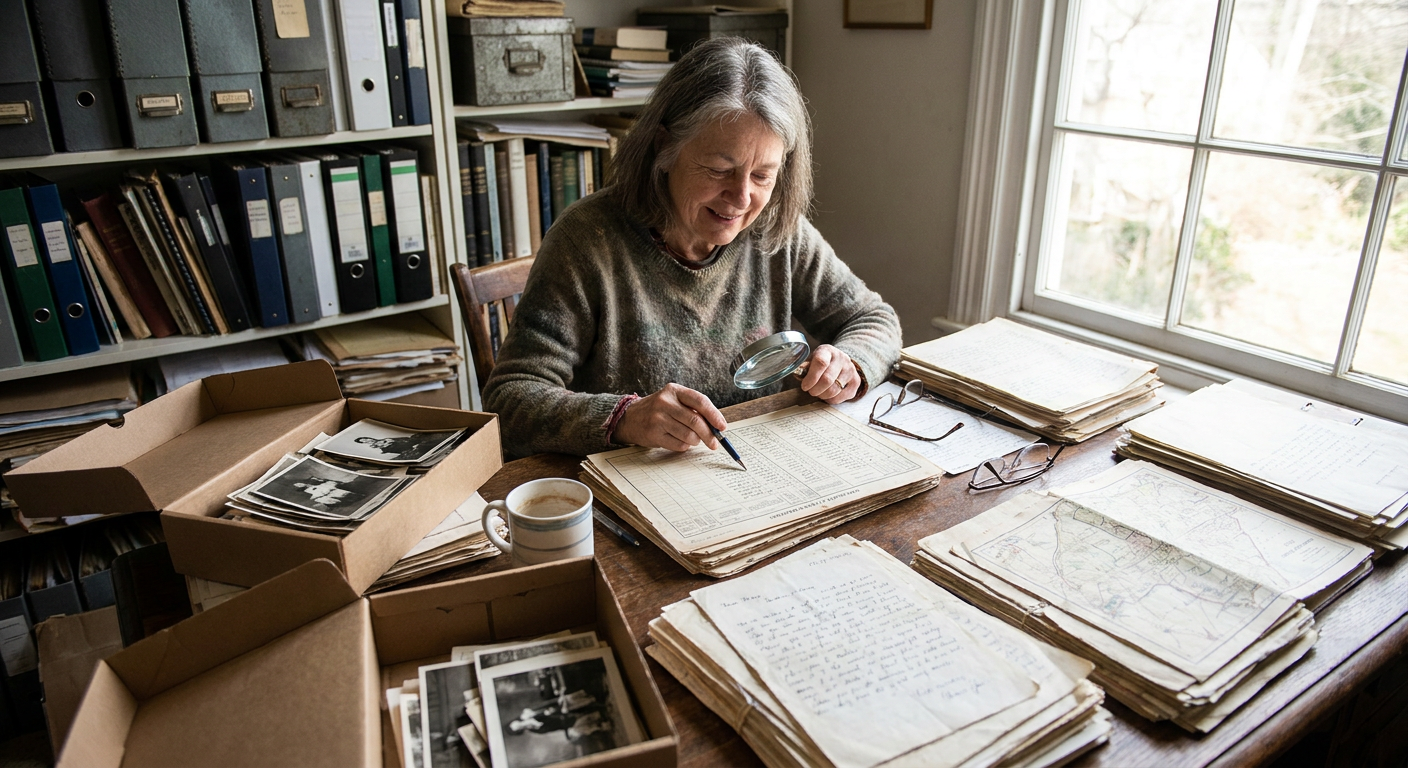
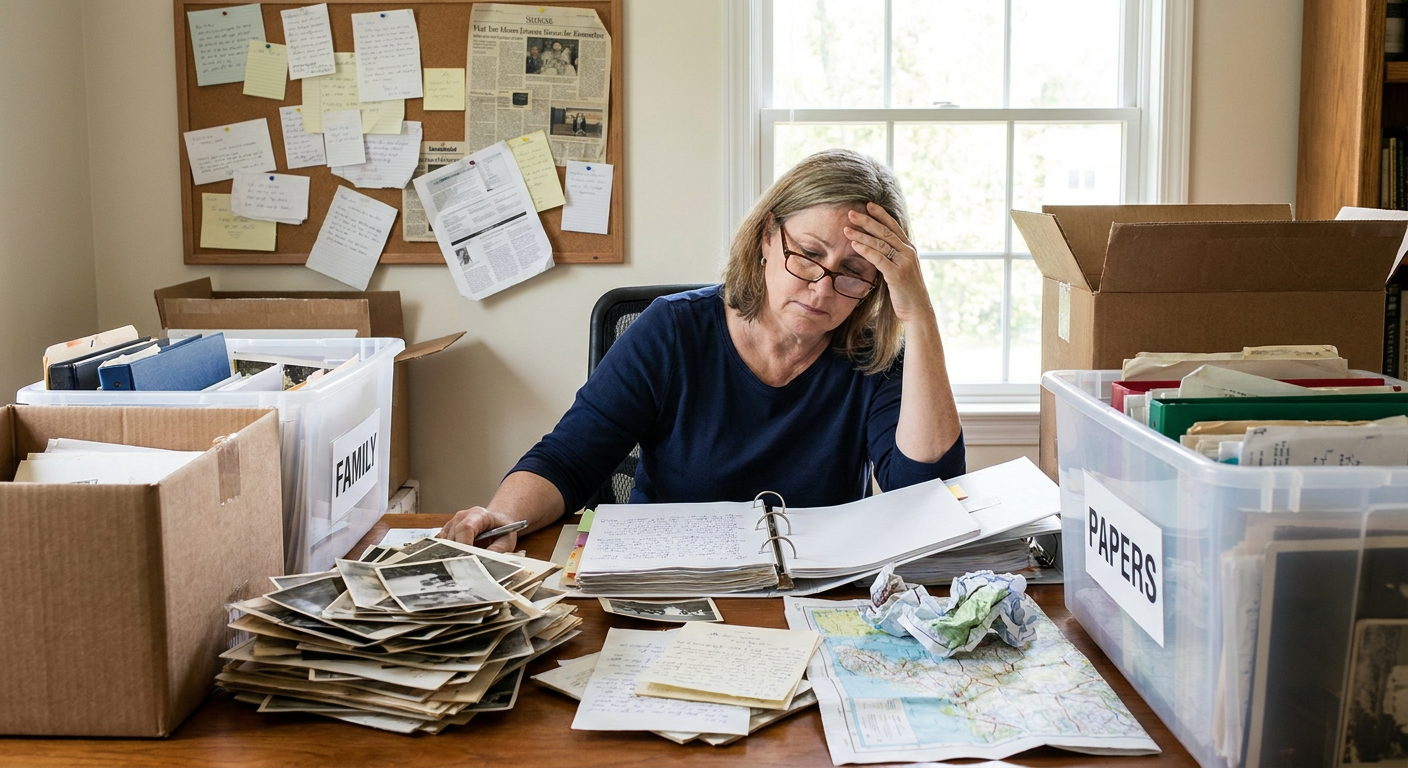
You have names, dates, and locations scattered across notes, browser tabs, and stacks of paper. This is the chaos of genealogy, a state familiar to both beginners and seasoned researchers. Yet, some genealogists navigate this complexity with remarkable skill, building accurate and richly detailed family trees. Their secret isn't luck; it's a collection of disciplined habits that transform the chaotic process into a clear, methodical pursuit.

By adopting a structured approach, you can move from feeling overwhelmed by information to feeling empowered by it. The journey from chaos to clarity begins with simple, consistent practices that create a framework for discovery.
Key Takeaways
- Start with a Goal: Effective research begins with a specific, answerable question. This focus prevents you from getting lost in irrelevant information and directs your search toward a clear objective.
- Organize Everything: A non-negotiable habit is a robust organizational system. This includes consistent digital file naming conventions and a structured approach to physical documents.
- Cite Your Sources: Every single fact, date, or relationship must be tied to the source where you found it. This practice is the bedrock of credible genealogical work.
- Work Methodically: The most reliable research path is to work backward in time, from the known to the unknown, one generation at a time. This prevents critical errors and mistaken identity cases.
They Begin with a Clear Goal
This turns a vague desire to "find my family" into a series of manageable tasks.
This focused approach allows you to choose the right databases and historical records for the job. It also helps you recognize when you’ve answered the question and are ready to formulate the next one.
A Meticulous System for Digital and Physical Files
Organization is the bedrock of efficient genealogy. Without it, you are doomed to repeat searches, lose valuable documents, and struggle to make connections between facts. The world’s most effective researchers have a system they stick to, covering both digital data and physical papers.
Digital Filing Conventions
For digital files, this means creating a logical folder structure on their computer, often organized by surname, branch of the family, or by individual ancestor. A consistent file naming convention is crucial within these folders. A popular method is to name files with key information like so: 1870_Census_Blanks_Sarah_HalifaxCounty_VA.jpg. This format immediately tells you the year, record type, surname, first name, and location, saving hours that would otherwise be spent opening files to identify them.
Protecting Physical Documents
Physical documents require a similar approach. This can involve using acid-free binders, folders, and storage boxes to protect original papers and photographs. Many genealogists use a filing system that mirrors their digital one, making it easy to locate an item regardless of its format. The goal is a seamless workflow where every piece of data has a home. Becoming organized is a process that takes time to develop, but it pays long-term dividends in research efficiency.
They Cite Every Source, Without Exception
If there is one habit that separates professional-level genealogists from hobbyists, it’s the rigorous citation of sources. Every piece of information added to a family tree, from a birth date to a place of residence, must be accompanied by a reference to where that information was found.
The Anatomy of a Good Citation
First, citations allow you to re-evaluate your own work. When you encounter conflicting information, your citations will let you quickly pull up the original sources and assess their reliability. Second, it shows others the basis for your conclusions. A good source citation answers five questions: Who created the record? What is the record? When was it created? Where is the original located? And where did you access it? According to researchers examining from hobby to necessity: the practice of genealogy, documentation standards have evolved significantly over the last century.
A "Work Backwards" Research Strategy
The golden rule of genealogy is to start with yourself and work backward, one generation at a time. Effective researchers adhere to this principle without fail. You begin with what you can prove with primary documents, your own birth certificate, and then your parents’ vital records. Each generation is a stepping stone to the next.
This methodical, chronological approach prevents you from making one of the most common and disastrous mistakes in family history: latching onto the wrong ancestor. It is tempting to find someone with the same name in the 18th century and assume they are your ancestor. However, without a documented paper trail, you risk building a tree on a false premise. Seasoned genealogists know that patience is a virtue and take the time to prove each link. Foundational guides for researchers often emphasize this principle as a core tenet of successful family history work.
They Understand and Evaluate Evidence
Finding a historical record is only half the battle. An effective researcher knows how to critically evaluate the information it contains. They don’t just accept every document at face value, understanding that any source can contain errors.
Direct vs. Indirect Evidence
Successful researchers understand the difference between original sources, created at the time of the event like a birth certificate, and derivative sources, which are transcriptions or indexes created later. They also consider direct versus indirect evidence. A birth certificate naming a child and parents is direct evidence of that relationship. A census showing a child in a household is indirect evidence; it strongly suggests a relationship but does not explicitly state it. In many academic contexts, scholars use pragmatic genealogy to build models that help discover why certain traits or records survive over time.
The Rule of Corroboration
Proficient genealogists look for multiple pieces of evidence to corroborate facts. For instance, an ancestor's life, told by their death certificate, can provide a wealth of information, but the informant may not have had accurate knowledge of the deceased’s parents or birth date. Cross-referencing these details with census records or birth registries is a hallmark of good research. This helps them navigate the complexities in historical documents, as seen in how researchers analyze everything from vital records to ancient artifacts.

Leveraging Technology, But Not Trusting It Blindly
Today’s genealogist has access to an incredible array of digital tools, from massive online historical record collections to sophisticated DNA analysis features. The most effective researchers embrace this technology to accelerate their work.
However, they maintain a healthy skepticism. They treat every hint, whether from a Smart Match™ or another user’s tree, as a clue, not a conclusion. They know that algorithms and other users can make mistakes, so the information must still be verified with original sources.
Embracing DNA as a Complementary Discipline
In the 21st century, a comprehensive approach to family history often includes genetic genealogy. An autosomal DNA test can confirm suspected family connections, break through brick walls, and reveal surprising details about heritage.
These researchers look at the amount of shared DNA, measured in centimorgans (cM), to estimate how closely they are related to a DNA Match. They build trees for their matches to find the common ancestor and use advanced tools like a Chromosome Browser to analyze shared segments. They recognize that DNA can debunk long-held family myths and sometimes uncover unexpected truths. This integration of science and history is a powerful combination for uncovering the complete story of a family.
Frequently Asked Questions