English
sit at the intersection of practical research and the slower work of family history. Understanding how can an algorithm ethically speak for the dead? fit together gives researchers a clearer way to explore questions about earlier generations. The sections that follow walk through what each one offers and how they complement other approaches to family-history research.

Key Takeaways
- The ability to recreate an ancestor's voice using AI presents a new frontier in genealogy, but it requires careful ethical consideration.
- Gaining consent from the deceased is impossible, so the responsibility falls to living descendants to approach the process with respect and broad family consensus.
- Accuracy is paramount. An AI-generated voice should narrate scripts based on verifiable historical facts and records, not speculation, to uphold historical integrity.
- Transparency is vital. Any AI-generated audio should be clearly labeled as a recreation to avoid misleading future generations and to honor the distinction between authentic and synthetic media.
The Voice from Beyond: What is AI Voice Recreation?
AI voice recreation, often called voice cloning or synthesis, is a technology that uses artificial intelligence to generate a realistic human voice. The process typically involves training a machine learning model on existing audio recordings of a person. The more audio data available, the more accurately the AI can capture the unique pitch, cadence, and timbre of the individual’s voice. In the context of historical preservation, this technology is being explored by museums and archives to bring the past to life. For example, an audio exhibit could feature a historical figure narrating their letters, providing a more engaging and personal experience for visitors.
For family historians, the application is deeply personal, especially since audio recordings for ancestors who lived before the 20th century are nonexistent. In these cases, the technology does not clone a voice but synthesizes a new, representative one. The AI can be guided to create a voice based on demographic data, such as age, gender, and regional accent inferred from historical records. The process transforms a collection of dates, names, and places from a family tree into a compelling, first-person narrative that can be shared and preserved for generations.
The Question of Consent: Who Gives Permission for the Deceased?
The central ethical issue in recreating a deceased person's voice is consent. Obviously, it is impossible to ask the person directly. This places a significant responsibility on the living, transforming a technological process into a deeply human negotiation. For public figures, this often involves getting written permission from their estate or legal heirs, with strict agreements defining the scope and intent of the voice recreation. Some ethicists now suggest that modern oral history projects should routinely seek permission from interviewees to create AI versions of their voice in the future, planning for a legacy they will not see.
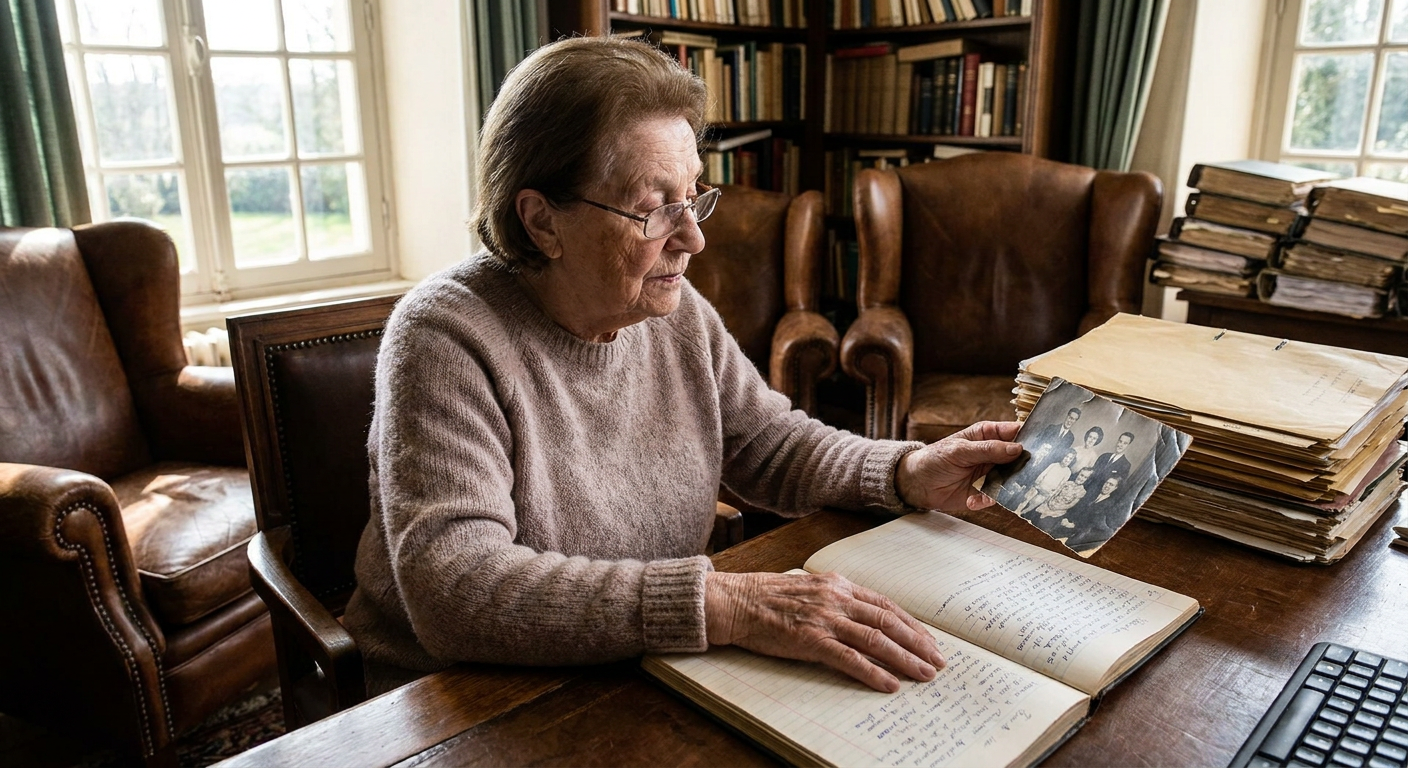
For a family ancestor, this "estate" is the family itself. The decision to recreate a voice should not be made by a single individual. It is a collaborative process that requires navigating sensitive family dynamics and respecting the varying comfort levels of different relatives. Unauthorized simulations, particularly of individuals from marginalized or indigenous communities, run a high risk of perpetuating stereotypes or causing offense rather than honoring heritage.
The conversation must be rooted in a shared goal: to honor the ancestor’s life and legacy in a way that feels authentic and respectful to everyone involved. This is not a technical problem to be solved, but a human conversation to be had with empathy and foresight.
A Practical Guide to Ethical Engagement
As this technology becomes more accessible, family historians need a framework for using it responsibly. Approaching AI voice recreation as a thoughtful, curatorial project rather than a casual experiment is key. The following steps can help guide you in navigating the complex ethical considerations with the care and respect your ancestor deserves.
Step 1: Seek Broad Family Consensus
Before ever embarking on a project to recreate an ancestor’s voice, the first step is to talk to your family. Present the idea clearly, explain the technology, and facilitate an open discussion about the potential benefits and concerns. This isn’t about getting a legal waiver; it’s about building a collective agreement that this is a respectful and meaningful way to honor your shared heritage. Discussing potential points of disagreement upfront can prevent hurt feelings later. Some questions to consider asking are:
- How would we feel if this voice narrated a story that we later learn is factually inaccurate?
- Who will be responsible for writing and fact-checking the script that the voice will narrate?
- Are there any topics or life events that should be considered too private or sensitive to include?
- How will we label this audio to ensure future family members know it is a recreation?
This collaborative approach ensures the final product is a source of connection and shared pride, not contention.
Step 2: Prioritize Accuracy and Context
An AI-generated voice is only a vessel; the words it speaks are what give it meaning. AI can be used to narrate historical events. If your ancestor’s diary or letters exist, these are the gold standard, allowing you to use their actual words.
It is also critical to maintain strict adherence to legal and ethical obligations governing the use of archival materials. The goal is to have the ancestor tell their own story, as documented by the historical record, not to invent a fictionalized persona. Avoid speculation and resist the temptation to fill in gaps with assumptions.
Step 3: Be Transparent About the Artifice
Clarity and transparency are essential when presenting any AI-generated content. Just as colorized photos are understood to be modern interpretations, a synthesized voice must be clearly and consistently identified as a recreation. Professional historical bodies recommend total transparency in the use of AI to avoid blurring the lines between authentic historical material and AI-generated content. Misrepresenting a simulation as a genuine artifact can undermine the trust of your audience and create problematic records for future genealogists.
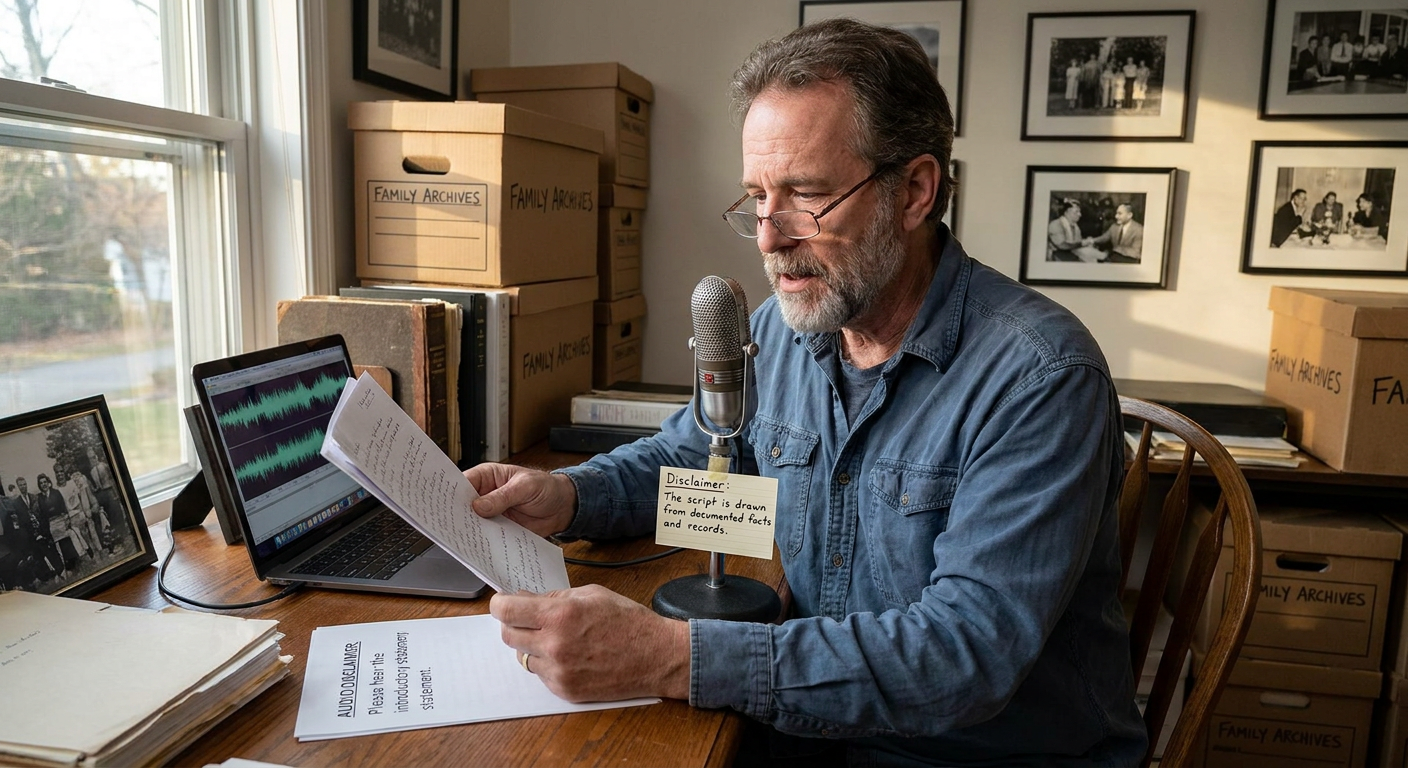
Any audio you create should be accompanied by a clear, unambiguous disclaimer, both verbally at the beginning of the audio and in any written description. The script is drawn from documented facts and records." This labeling prevents misinformation and ensures that future generations understand what they are listening to, respecting both the listener and the ancestor.
Step 4: Consider the Dignity of the Individual
Finally, and most importantly, consider the purpose of the project. Is it to educate younger generations about their roots or to create a moving tribute for a funeral or family reunion? The use of this technology should always aim to uphold the dignity of the person being represented. This means avoiding trivialization.
Using an ancestor’s voice to read a shopping list, tell a joke they never told, or endorse a modern product would be a profound disrespect to their memory. Family historians must model responsible use, focusing on remembrance, education, and connection to ensure that the project remains a tribute of love and respect, as we have a responsibility to equip future generations with ethical frameworks.
Beyond the Script: The Unspoken Story
While we build scripts from documented facts, we must also acknowledge what AI cannot capture. A voice is more than a collection of words spoken at a certain pitch. It’s the sigh of weariness after a long day of farm labor, the crack of emotion when speaking of a lost child, the joyful tone when recounting a wedding day. AI can read the words from an ancestor's death certificate, but it cannot convey the weight of the story behind it.
The AI-generated voice is a powerful supplement, but it is not a replacement for the deep, empathetic work of genealogy. Its greatest value is in its ability to spark curiosity and inspire others to search historical records and human stories that form the foundation of your family's past.
The Archivist's Dilemma: AI and Historical Integrity
Beyond individual family projects, the rise of generative AI is forcing a broader, and sometimes contentious, conversation within the historical and archival communities. While AI can help process vast digital archives at incredible speeds, it cannot replace the nuanced, contextual work of human archivists in understanding provenance, identifying bias in a collection, or interpreting the silences in the historical record. The archival and historical professions are actively developing norms and recommendations to guide the use of AI, emphasizing the need for human review, fact-checking, and clear source verification to maintain the integrity of our collective past.
This evolving dialogue is critical. As stewards of history, both professional and amateur, there is a shared responsibility to engage with these powerful new features thoughtfully. Those who create an AI-generated voice for an ancestor act, in a small way, as archivists of their own family’s history. They curate an experience and make interpretive choices. By adhering to the core archival principles of accuracy, transparency, and respect for the individual, this incredible new technology can be used not to rewrite the past, but to bring it to life with the integrity it deserves.
Frequently Asked Questions