English
Uncovering the full story of your family is a fundamental human desire. For generations, this meant piecing together names and dates from historical records, hoping to build a fragile paper trail into the past. Today, however, a revolutionary approach allows us to read a story written into our very cells. Autosomal DNA testing provides the most comprehensive view of our recent heritage available, analyzing genetic information inherited from all of our ancestral lines to unlock the complete biological history of modern families.

Key Takeaways
- Autosomal DNA tests analyze the 22 pairs of non-sex chromosomes, which contain genetic information inherited equally from both your mother and father.
- This type of test is the most effective for finding relatives across all branches of your family tree, typically within the last 5-7 generations.
- Your results will include two primary components: an Ethnicity Estimate, which reveals the geographic origins of your ancestors, and a list of DNA Matches, who are other individuals in the database that share DNA with you.
- Combining autosomal DNA results with traditional family tree research creates a powerful strategy for confirming relationships and breaking through long-standing genealogical brick walls.
What Is Autosomal DNA? A Look at the Science of You
To understand the power of autosomal DNA, it helps to start with a quick biology lesson. Humans have 23 pairs of chromosomes, which are tightly coiled bundles of DNA inside our cells. Twenty-two of these pairs are called autosomes, while the 23rd pair consists of the sex chromosomes (X and Y) that determine biological sex. You inherit one chromosome from each parent to form a pair, meaning you receive exactly half of your autosomal DNA from your mother and half from your father.
However, the specific DNA you inherit is a unique combination created through a process called genetic recombination. Before being passed down to you, your parents’ DNA is shuffled, meaning you receive a different mix of their genes than a sibling would. It's also why testing multiple siblings can be a powerful strategy, as each sibling will have inherited different pieces of ancestral DNA, providing a more complete picture of the family's genetic heritage.
This is what makes autosomal DNA testing so uniquely suited for genealogical discovery. Other types of DNA tests, like mitochondrial DNA (mtDNA) or Y-chromosome (Y-DNA) tests, follow a single path. MtDNA traces a direct, unbroken maternal line (mother to mother to mother), and Y-DNA traces a direct, unbroken paternal line (father to father to father). While valuable for deep ancestral studies, they only show a tiny fraction of your total heritage. An autosomal DNA test, in contrast, examines genetic material from all of your recent ancestors on every branch of your family tree, giving you a complete, high-resolution snapshot of human ancestry and evolution.
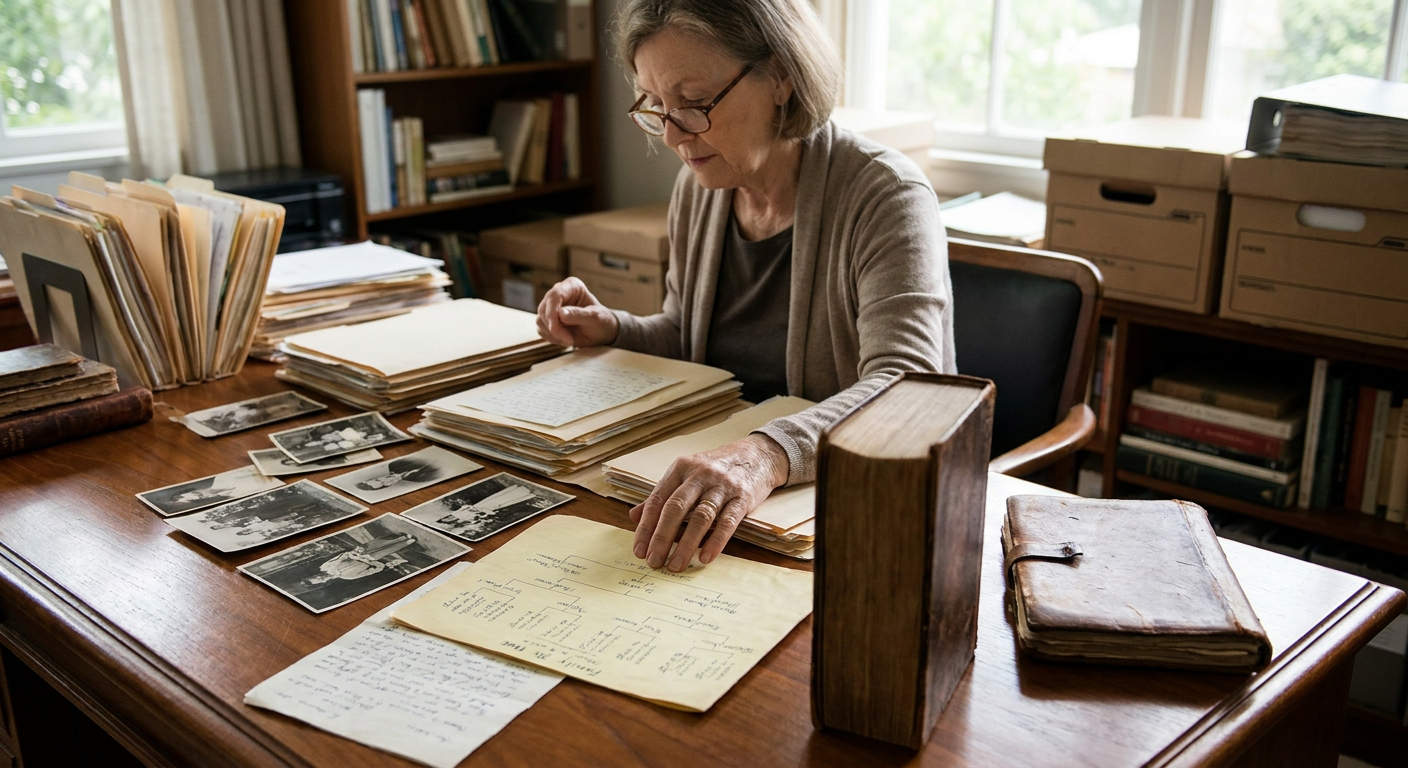
Demystifying Your Autosomal DNA Test Results
After submitting a simple cheek swab sample, the laboratory analyzes specific points in your DNA known as single-nucleotide variants (SNVs). The results are then presented in two main parts, each offering a different window into your past.
The Ethnicity Estimate: A Map of Your Heritage
One of the most popular features of an autosomal DNA test is the Ethnicity Estimate. This analysis compares your DNA to reference populations from around the world to identify the geographic regions your ancestors likely came from. It appears as a percentage breakdown, such as a mix of Scandinavian, Irish, Scottish, and Welsh, and North and West European heritage. For many, this confirms what they already knew about their family, but it can also reveal surprising connections, like families in the U.K. who discover unexpected Mediterranean heritage.
Beyond broad percentages, advanced analysis can provide you with Genetic Groups. These offer a much higher-resolution view, often identifying specific provinces, districts, or even towns where a group of your ancestors lived.
DNA Matches: Connecting with Your Biological Family
Perhaps the most powerful component for growing your family tree is your list of DNA Matches. This is a list of other people who have taken a DNA test and share significant segments of DNA with you. These individuals are your biological relatives, ranging from immediate family members to distant cousins.
Each match is presented with an estimate of your relationship, based on the amount of shared DNA. For genealogical purposes, this shared DNA is often measured in units called centimorgans, and understanding this value is critical to making sense of your match list and figuring out how each person fits into your family tree.
How Autosomal DNA Supercharges Your Family Tree Research
The DNA provides biological clues that can confirm, deny, or guide your search through historical records.
Breaking Through Brick Walls
Every genealogist encounters a "brick wall"—an ancestor whose story seems to stop abruptly, with no records to reveal their parents or origins. DNA can act as a wrecking ball. A DNA match who is a predicted 3rd cousin could be the key. By collaborating and comparing family trees, you might discover that you both have ancestors from the same small town in Scotland.
Your match's tree goes back further, showing a family that emigrated to Canada in the 1920s. This powerful clue suggests that your great-grandmother's family was part of the same migration wave, giving you a new location and specific surnames to investigate in Scottish records.
Verifying Your Paper Trail
Genealogy often involves assembling evidence and forming hypotheses. You might find a birth certificate that seems to belong to your ancestor, but the details are slightly off due to a common name or transcription error. DNA can provide the biological proof. If you build your tree based on that record, your DNA Matches should align with the relatives you've added. This is especially useful for verifying relationships before the era of widespread vital records, where family connections can be ambiguous.
Discovering Unknown Branches
The most profound discoveries often come from the unexpected connections that DNA reveals. For individuals who were adopted, have unknown parentage, or have family stories of a relative who "disappeared," autosomal DNA can provide answers. A close match can lead to the identification of a birth parent or connect you to an entire branch of the family you never knew existed. This same technology has even proven instrumental in solving decades-old cold cases by identifying unknown individuals through their distant relatives.
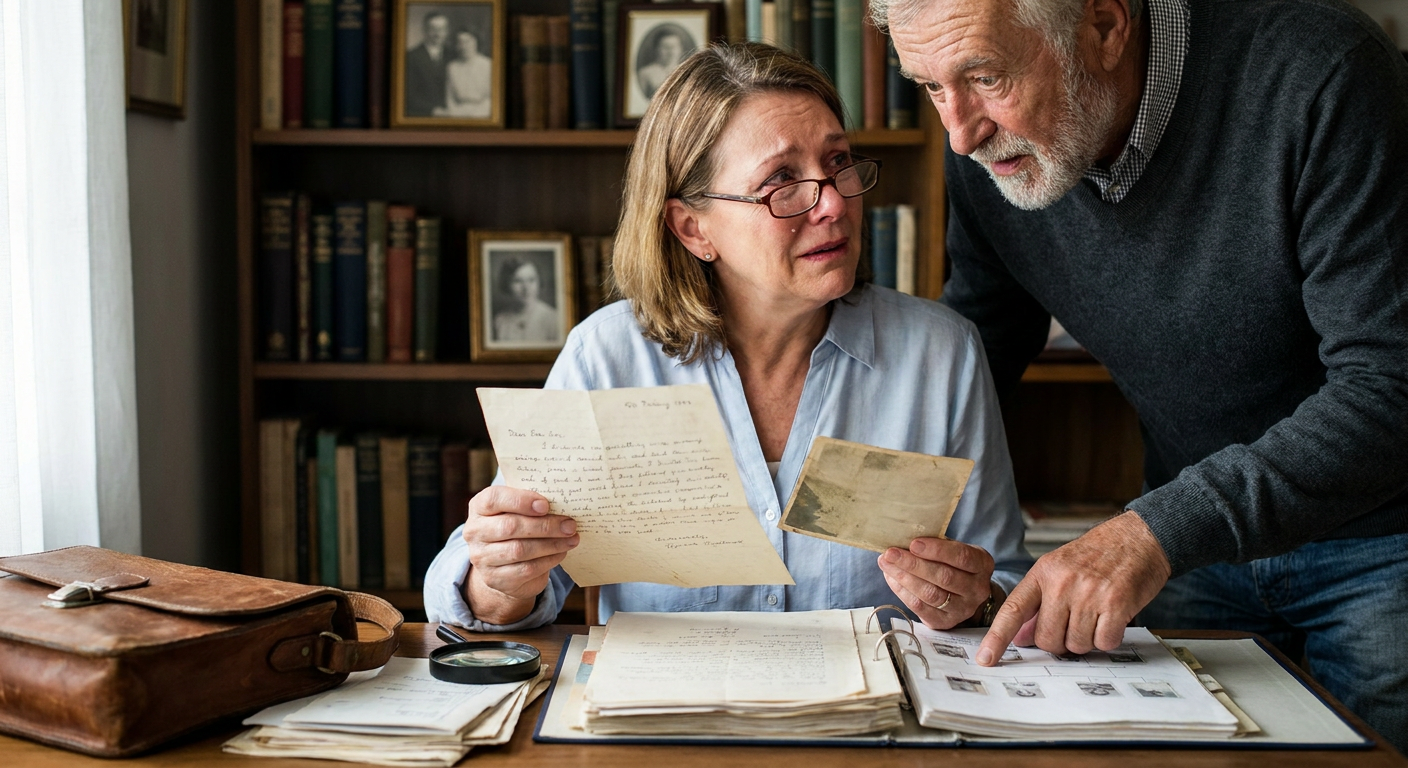
From Clues to Certainty: Using Historical Records to Prove DNA Links
A list of DNA Matches provides a powerful set of biological leads, but it's the combination of genetics and genealogy that truly builds a complete family story. A predicted 3rd cousin is a compelling clue, not a confirmed fact. The next step is to turn to historical documentation to prove the connection and understand how you are related. This detective work is where your family tree truly begins to grow.
Start with the Obvious: Surnames and Locations
The best place to begin is by analyzing what you and your match have in common. Look for overlapping ancestral surnames and geographic locations in your respective family trees. Many times, the link will be immediately apparent, you both have a great-great-grandmother with the same uncommon maiden name from the same small county. Use this as your primary hypothesis and start looking for a document that formally connects the two family lines.
Build the Bridge with Census and Vital Records
A death certificate, for example, often names the parents of the deceased, directly linking one generation to the next. These records transform a genetic probability into a documented fact.
Corroborate with Deeper Records
Once you have a probable link, fill in the story with other record collections. Obituaries can be treasure troves, often listing surviving siblings, children, and spouses, helping you map out collateral lines and confirm that the family structure suggested by your DNA match is accurate. Military records, immigration passenger lists, and even local histories can all add layers of proof and rich narrative detail to the connection you first discovered through your DNA. There is comprehensive information on Autosomal DNA available to guide you.
A Practical Guide: Getting the Most Out of Your DNA Results
Your results are just the starting point. Follow these steps to maximize your chances of discovery.
-
Link Your DNA to a Family Tree: A DNA kit without a tree is like a library with no card catalog. Linking your results to a public or private family tree provides crucial context for you and your matches. Even a simple tree with your parents, grandparents, and great-grandparents can help you and your matches figure out your connection.
-
Review Shared Matches: This powerful feature shows you which other relatives you and a specific DNA Match have in common. This is the key to sorting your matches into family lines. If you recognize a known maternal cousin in the shared matches list for an unknown relative, you can deduce that the unknown match is also on your mother's side.
-
Organize and Contact Your Matches: Don't hesitate to reach out, but do so thoughtfully. Keep your initial message brief, introduce yourself, explain your shared match, and mention any ancestral surnames or locations you have in common. Adopting the habits of effective genealogists, such as being organized and collaborative, will yield much better results.
-
Explore Advanced DNA Features: As you become more comfortable, you can explore more advanced features for in-depth analysis. A Chromosome Browser, for example, lets you see the exact DNA segments you share with a match. Understanding the science behind these features can offer more definitive proof of relationships.
The Broader Context: DNA and the Future of Family History
The advent of DNA testing has revolutionized the field of genealogy. This trend is visible everywhere, from cultural events to major genealogy conferences like RootsTech, where DNA discovery is a central theme.
Of course, with any powerful science, it is important to separate fact from fiction. Many myths about genetic genealogy persist, but a clear understanding of the science can help you interpret your results with confidence. It is a key that unlocks a door, but you still have to step through it and explore the rooms beyond.
An autosomal DNA test offers a unique view into the story of you. By exploring this history, you not only learn about where you came from, but you also open up new possibilities for connection in the present.
Frequently Asked Questions