English
Family history enthusiasts watch RootsTech each year not just for inspiration, but for a glimpse into the future of genealogy.

Key Takeaways
- RootsTech 2026, the world’s largest genealogy conference, was held both in-person in Salt Lake City, Utah, and online in early March.
- The dominant theme was the integration of Artificial Intelligence (AI) into core genealogical tasks, moving beyond photo editing to sophisticated DNA and data analysis.
- Major platforms announced new features focused on improving researcher workflow, such as dedicated private workspaces for organizing complex projects.
- The trend points toward technology that assists researchers in interpreting vast amounts of data, helping to surface narratives and connections that might otherwise be missed.
The Epicenter of Family History Innovation
For over a decade, RootsTech has served as the premier stage for innovation in the genealogy world, a place where the community gathers to learn new techniques and see the latest technology. This year’s conference continued that tradition, with a clear focus on tackling one of modern genealogy’s biggest hurdles: data overload. RootsTech 2026 Spotlights AI Standards, Platform ... emphasizes the shift toward responsible integration of these tools.
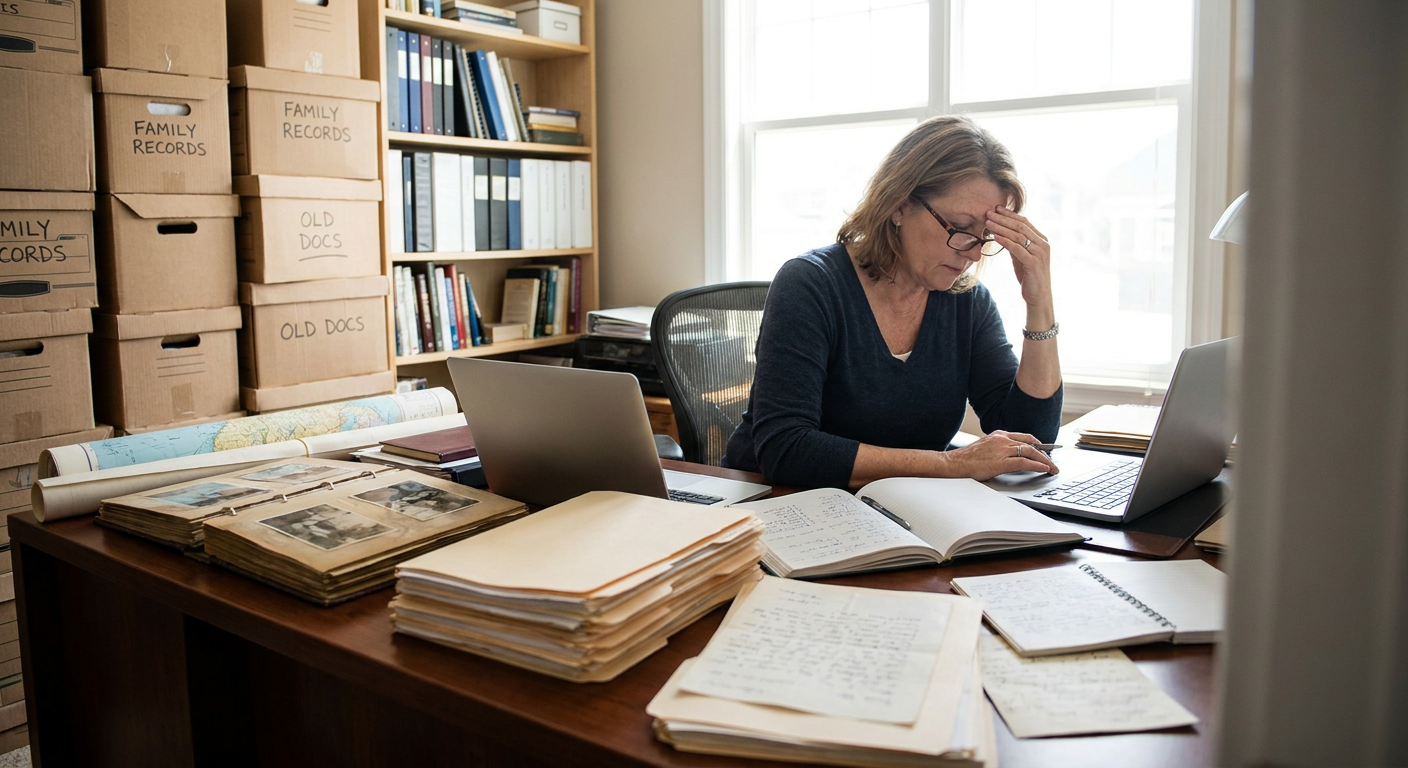
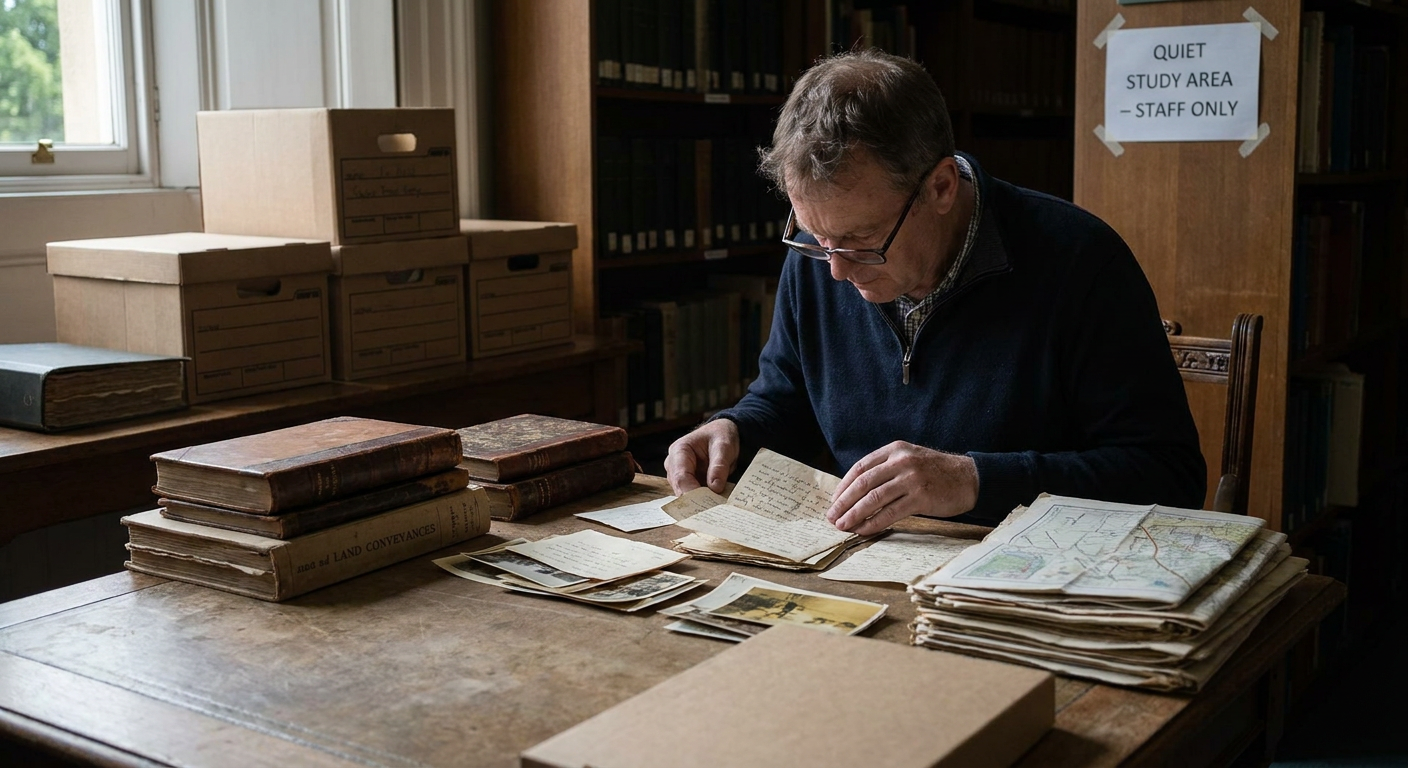
Just a few generations ago, the primary challenge for a family historian was a scarcity of information. Research often involved traveling to distant archives and manually sifting through fragile documents in hopes of finding a single clue. Today, the landscape has been completely transformed by digitization, presenting the opposite problem: a near-infinite sea of records, census data, newspaper articles, and DNA matches available with a few keystrokes.
The challenge for today’s family historian is not a lack of information, but navigating the sheer volume of it. The next wave of innovation, as previewed at the conference, is all about creating intelligent systems that manage this data, extract meaning from it, and help tell the stories hidden within. These tools are designed to serve as a filter and a guide, helping researchers find the relevant signals in an overwhelming amount of noise. From Chaos to Clarity: The Research Habits of the World's Most Effective Genealogists remains a vital guide for those managing these large datasets.
AI Steps Out of the Photo Album
For the past several years, AI has made a dramatic impact on family history through visual applications like photo restoration and animation. These features gave researchers a startlingly vivid connection to their ancestors, but the announcements at RootsTech 2026 signaled a significant expansion of AI’s role. The technology is now moving from the surface level of images to the foundational level of data, where it can assist with the core tasks of research and analysis.
The next frontier is data analysis and interpretation, using machine learning. This is a branch of artificial intelligence where computers are not explicitly programmed for a task, but instead learn to identify patterns from vast datasets. Artificial intelligence is exceptionally good at pattern recognition on a scale that can assist any researcher, spotting subtle consistencies and potential links across millions of records far faster than a human ever could.
Conceptually, this process mimics an experienced researcher's intuition, but operates on a global scale. Where a person might notice a recurring surname in a specific parish, an AI can detect that same pattern across digitized documents from multiple countries and languages. This ability to cast a wider net allows for the discovery of previously unimaginable connections, such as distant migration paths or branches of a family separated by continents and centuries. Discussions on the Beyond Family Tree Conference Programme | University of Strathclyde highlight how interdisciplinary perspectives on AI are reshaping the field.
This shift inevitably raises important questions, touching on subjects like the ethics of letting an algorithm speak for the dead. However, the goal of these emerging technologies is not to replace the researcher, but to act as a tireless, data-savvy assistant. An AI can highlight a connection that might take a human researcher years to find, allowing you to focus on the human side of the story, the "why" behind the data.
DNA Analysis Gets an Intelligent Boost
Nowhere is the potential of AI more apparent than in genetic genealogy. This field uses DNA testing to help determine the level and type of genetic relationship between individuals, uncovering family connections that may not be present in the written record. For many, it has become an essential tool for verifying traditional research and breaking through long-standing genealogical puzzles, often called "brick walls."
The challenge lies in making sense of the hundreds or even thousands of DNA matches a single test can provide. Researchers must navigate complex shared match lists and triangulate segments of DNA to pinpoint a common ancestor, a process that can be intimidating for newcomers and time-consuming even for experts. The sheer amount of data can be paralyzing, leaving many users unable to move beyond a simple list of genetic relatives.
The implications are profound. Understanding the connections between DNA matches is key to breaking down brick walls, but it can be an overwhelming task. Comprehending concepts like centimorgans is crucial, yet not all connections are straightforward. AI-powered tools promise to streamline this process, potentially grouping matches by shared ancestral lines, flagging relevant chromosomal segments, or even predicting relationships with a higher degree of certainty.
This could dramatically lower the barrier to entry for complex genetic analysis, helping more people make sense of surprising results, like the many British families who are discovering unexpected Mediterranean DNA. Recent updates from Advancing Genetic Genealogy | University of Strathclyde suggest these digital breakthroughs are becoming more accessible.
A Closer Look: The Tech Unveiled
The buzz at any RootsTech conference centers on the "what's next" announcements from major players in the genealogy space. This year, the focus was less on single, flashy features and more on holistic improvements to the research process itself. The underlying principle is to help genealogists become more effective by providing smarter, more organized digital environments that better reflect the non-linear, often messy, reality of piecing together a family's past.
Geni's Pro Workspace
This is a significant step beyond simply building a tree. Here, you can keep notes, form hypotheses, track correspondence with other researchers, and organize source materials before attaching them to your formal family tree.
This approach offers a private, contained environment often referred to as a research "sandbox." In this digital space, you are free to explore tentative leads and build out hypothetical family structures without committing unverified information to a public or shared tree. This is crucial for maintaining accuracy, as it allows for thorough analysis and vetting of evidence away from the main stage, ensuring that only well-supported conclusions make it into the final narrative.
The AI-Powered Future of GEDmatch
Many of the most powerful tools in genetic genealogy exist on third-party platforms. These are services where users can upload their raw DNA data from various testing companies to gain access to a larger pool of potential matches and more advanced analytical features. These platforms have become an essential part of the toolkit for serious researchers looking to push the boundaries of what DNA can reveal.
Applying artificial intelligence to these vast DNA repositories holds enormous potential. Conceptually, AI could offer entirely new ways of visualizing genetic networks, moving beyond simple lists to create interactive maps of how different match groups are related to one another. Furthermore, by cross-referencing DNA data with family trees uploaded by users, an AI could learn to predict common ancestors with a higher degree of confidence, highlighting the specific lines where a breakthrough might be found.
The Quest for the “One-Click Tree”
The term “one-click tree” is a bit of an industry shorthand; genealogy will always require critical thinking and careful documentation. No button will ever build an accurate, sourced family tree from nothing.
This is because historical records themselves are not simple, clean data points. Names are misspelled, dates are approximated, and relationships can be ambiguous or misstated. A single document can contain both valuable clues and critical errors. The human researcher's role is to act as a detective, evaluating the credibility of each piece of evidence, comparing it against other sources, and resolving conflicts to build a cohesive and logical conclusion. Even at the (PDF) AAHGS 45TH National Conference on Fighting Erasure, the importance of keeping human focus in history remains paramount.
This trend toward sophisticated, organized workspaces acknowledges that modern genealogy involves juggling numerous sources, from digital archives of historical records to DNA match data to family interviews. This focus on organization and workflow represents a maturation of the online genealogy market, recognizing that serious researchers need professional-grade features to manage their work effectively.
How to Prepare for the Next Wave of Genealogy Tech
The effectiveness of these AI tools will depend heavily on the quality of the data they have to work with. You can take steps now to ensure you’re ready.
First, focus on your own family tree. Ensure it is as accurate and well-sourced as possible. AI works by identifying patterns. If your tree data is clean, with standardized place names, consistent date formats, and solid source citations for relationships, the AI will have a much better chance of finding accurate connections and relevant records for you. Go back over your work, resolve conflicting information, and make sure every person has the vital events properly documented.
Second, if you haven’t already, consider whether you should take a DNA test. An AI can analyze your data in ways that would be impossibly time-consuming to do manually. Having your DNA in the major databases ensures you will benefit from these new analytical features as they roll out. The greater the amount of data available for comparison, the more powerful and insightful the resulting analysis will become.
Finally, cultivate a mindset of critical thinking. Technology is a tool, not an oracle. AI will provide hints, suggestions, and probabilities. It might suggest a record is a match based on a name and birth year, but it will still be up to you to examine the original document, consider the location, check the names of witnesses or parents, and use your judgment. It is the family historian who must evaluate the evidence, consult original documents, and make the final determination.
What This Means for Your Family History
The rise of AI assistants and refined workspaces empowers you to work smarter, not harder. Instead of losing track of a promising lead in a sea of browser tabs, you can organize your thoughts and evidence in a dedicated digital environment. This systematic approach allows you to build stronger, more evidence-based conclusions about your ancestry.
These two major trends—AI-driven analysis and structured research environments, are deeply interconnected. A well-organized workspace provides clean, reliable data that makes AI suggestions more accurate and relevant. In turn, the insights surfaced by an AI can help you prioritize your next research steps and organize new findings within your workspace, creating a powerful, self-reinforcing cycle of discovery.
The growing interest in family history is being met with increasingly powerful and intuitive platforms. This technological evolution makes it easier than ever to not just collect names and dates, but to uncover the rich, compelling stories of the people who came before us. By connecting disparate data points, these tools help us visualize our ancestors' lives in the context of their communities and their times.
The journey of discovery is a personal one, but the tools we use to navigate it are constantly evolving. The innovations showcased at RootsTech offer a powerful glimpse of a future where technology and tradition work hand-in-hand. This synthesis promises to connect us with our heritage in deeper and more meaningful ways, enriching our understanding of not only who our ancestors were, but also who we are today.
Frequently Asked Questions